(Originally published in FMR’s Opus Magazine, September 2024).
A pilot’s business is with the wind, and with the stars, with night, with sand, with the sea. He strives to outwit the forces of nature. He stares with expectancy for the coming of the dawn the way a gardener awaits the coming of spring. He looks forward to port as a promised land, and truth for him is what lives in the stars.
Antoine de Saint-Exupery
Two authors (both pilots) should be prescribed for any aviator’s must-read list. Antoine de Saint Exupery is one, especially for his Night Flight and Sand, Wind and Stars.
The other is Ernest K Gann – with a library list of his own, headed by Fate is the Hunter. Oh, and I must add the best read for helicopter pilots – Robert Mason’s Chicken Hawk, his memoir of flying Hueys during the Vietnam conflict.
But back to De Saint Exupery and Night Flight: Flying at night is special. Many were the nights I spent counting passing satellites and flaming meteors streaking across the sky, marvelling at the absolute clarity of the Milky Way from our dark cockpit at forty-one thousand feet. Wondering whose little light would still be twinkling down there in the dark expanse of the African continent, being awestruck by the magnificence of a summer thunderstorm illuminating the massive thunderheads – the memories are many, reminding me of a quote by Adolf Galland: “Flying is more than a sport and more than a job; flying is pure passion and desire, which fill a lifetime.”
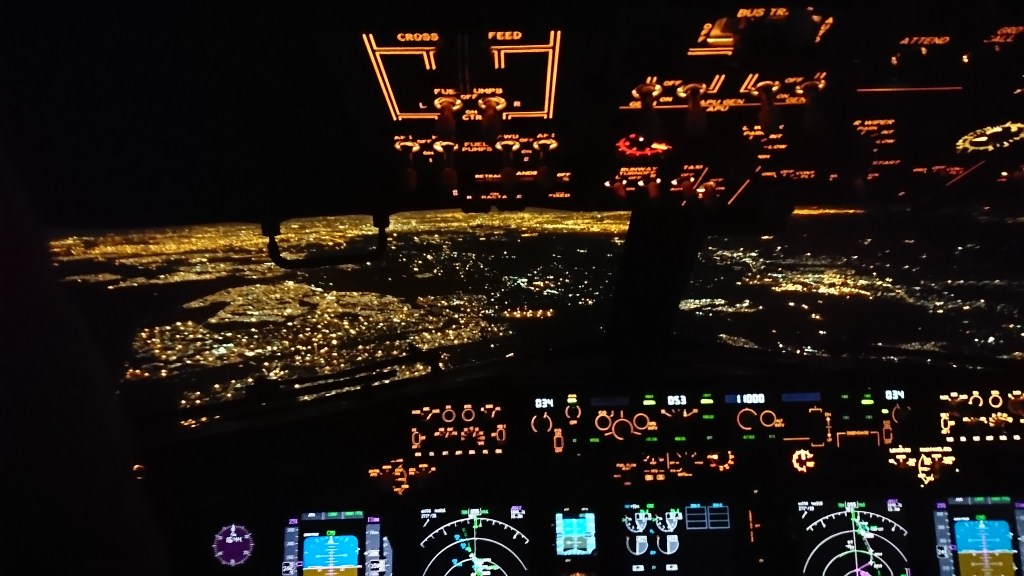
That quote could be moved directly to the field we occupy ourselves with – radio and broadcasting, “pure passion and desire, which fill a lifetime.”
Traditionally, the late-night slots were where you let the inexperienced new presenters loose – most of us who started out in professional radio cut our teeth on some late-night shows. At FMR we are fortunate to have some very capable late-night presenters, among them some exciting young talents. Give them a listen – Shireen Fisher, Siphiwo Deke and Andrew Williams, who present late-night jazz on Fridays, Saturdays and Sundays from nine until midnight. During the week we have some experienced voices on air late at night – Penelope, Graham McCulloch, Dragana Jevtovic, Saan Mahomed – all stalwarts and music experts.
It reminds me of The Nightfly, Donald Fagen’s first solo album from 1982 (just after Steely Dan had disbanded). Amongst other topics Fagen sang about late-night jazz disc jockeys. It became a bit of a cult album for those of us on air in those days!

A radio studio late at night is a special place – intimate, lights low and especially with FMR simply the best music around. Situated in Artscape’s Marble Foyer, our studio has the added advantage that you can see the crowds attending shows, and they can see you.
When next you’re driving home after a show or relaxing late at night – FMR is still your best companion. Your favourite music, on your favourite station, presented by passionate radio people. Late at night it doesn’t get better than that.

 Hangar Talk with Eon
You must be logged in to post a comment.