100 Days and Counting.

Last time I was counting down at 50 days, and here we are past 100 days – still under lockdown, albeit with the somewhat more accommodating regulations of Level 3.

As discussed in my last blog, we are indeed now seeing a return to flying. It may be much reduced and restricted, but at least there is some movement. Many industry experts and organisations have speculated on just how long it would take for commercial aviation to recover, but rather than commit to forecasts, I will adopt a wait and see attitude. I’m reminded of Warren Buffet’s quip: “Forecasts may tell you a great deal about the forecaster, they tell you nothing about the future”.

What caught my attention during this period are peoples’ attitudes about the COVID-19 pandemic. One only has to look at social media posts to witness the stupid and boorish behaviour of many citizens around the world – the woman throwing groceries around or the man shouting abuse at shop assistants – instances where the issue was their refusal to wear masks, despite the clear rules at shop entrances stating “No mask – No Entry”.

Psychologists are quick to point out the reasons for such behaviour – just Google the psychological reasons for not wearing masks: You’ll be inundated with reasons ranging from denial to feeling powerless to political influence, mixed messages and psychotic or sociopathic behaviour.

All fair and well, but how are we dealing with the current situation in aviation?

Face facts, being a pilot currently is not a great occupation. All over the world airlines are laying off pilots – Emirates, Delta, Qantas, Air France, Air Mauritius – you name them, pilots are out of work everywhere. Expats are stuck with borders closed, households suddenly have no income – the situation is dire.

Now, to paraphrase Warren Buffet’s quote: Handling of a crisis will tell you more about the pilot than about the outcome.

I recently read a blog by pilot and author, Owen Zupp, who was laid off by Qantas (read HERE). While the business world and twitter experts are sprouting forth about resilience, here is a quiet example. Similarly, I recently met with a fellow Captain who had to sell his house, because they couldn’t keep up the bond repayments – yet this was done with almost stoic acceptance, dealing with the situation at hand in the most reasonable way. Just by way of explanation, crews in my company (as in many others) have been on unpaid leave since the beginning of lockdown. With no profitable flying possible for the foreseeable future, with licenses and currency now lapsed, it means proper crisis management to simply survive.

Shouting and screaming has never solved any problem – and professional pilots are trained to deal with crisis situations methodically and logically.

Thus  I found a recent webinar for GA pilots rather disconcerting.

While other people are dealing with life-and-death situations, some private pilots (and, sorry to say, some career pilots too) exhibited the same selfish and negative behaviour we see in the social media posts referred to earlier. Flaunting laws and regulations, threatening civil disobedience, using foul language – these are not traits one would expect of pilots behaving professionally. Abusing the hard-working volunteers, who actively are engaging with the CAA and other relevant departments to achieve the phased opening of recreational and sport aviation, while clearly showing a lack of knowledge and procedures, being totally ignorant of where to find NOTAMs and other relevant information – frankly, it leads me to question whether people exhibiting these negative behaviours should be allowed near an aircraft at all! .

Here we see some of the well known hazardous attitudes:

  • Anti-authority,
  • Impulsivity,
  • Invulnerability,
  • Macho, and
  • Resignation,
  • most obviously the anti-authority, invulnerability and macho attitudes.

These attitudes simply do not belong in a safe aviation environment. That is why highly experienced airline pilots now have to undergo three days of ground school and two days of simulator training before being allowed near an airliner – because they understand the associated risks and know that regulations and SOP’s are there for a reason.

Should one find regulations unreasonable or illogical, there are professional ways to bring about change. Until such time, professionals follow the rules.

I’m one of the very happy motor racing fans who are watching the first actual 2020 Grand Prix this weekend. Aviation can take a leaf from the F1 book on how to deal with the epidemic – essentially follow the published rules or you simply won’t be allowed near the track.

Simon Lazenby, Jenson Button and Martin Brundle social distancing while commentating on the Austrian GP qualifying.

The potential risks associated with not adhering to the rules for the new reality are just too great for this multi-million dollar sport – so no deviance is tolerated. And in F1 we are also dealing with strong A-type personalities, so no excuses for aviation!



50 Days and Counting

“I’m gonna give you Forty Days” sang Cliff Richard all those years ago. But we have not made it back yet – and forty days have come and gone.

Cliff

Fifty days – that’s how long we’ve now been under lockdown in South Africa.

For aircrew this could spell a multitude of problems, not least of which is the fact that most pilots and cabin crew are currently on unpaid leave. This loss of income has severe ramifications for many and it cannot be sustained for much longer.

That aside – despite the SACAA’s extension of licenses and ratings to the end of June, other implications could be as severe.

Among these is the requirement for recency and currency –  some airlines require a check-flight after 30 days without flying. Problem is, check-captains and instructors need the same, so they would have to regain currency in the simulator before doing any check-flying.

This may not be as easy as it sounds – we currently have no idea when flying will be allowed again and at what level. We can only assume that moving to Level 3 restrictions would allow for training and very restricted flights. But, should the nightly 20h00 – 05h00 curfew remain in place, (which appears to be the case under Level 3 restrictions), just imagine trying to schedule all training only during daylight hours – bearing in mind travel time before and after such simulator sessions. For airlines without their own simulators, finding and hiring time on simulators may initially be almost impossible – potentially delaying their return to training. Remember that the closed borders currently restrict international travel, which means that only local simulators (of which there are not that many) may be available.

Hopefully the restrictions on flying and flight training will not last another 40 days, at which stage the 90 day recency and currency regulations would mean that every airline pilot would have to do a simulator session before even touching an aircraft.

When we finally do start flying, albeit limited in frequency and routes, stored aircaft would have to be brought out of mothballs, checked, signed out and possibly test flown before doing any commercial flights. This could turn into a lengthy process.

Looking at IATA’s projections for the recovery of commercial aviation, we’re in for a long and slow recovery.

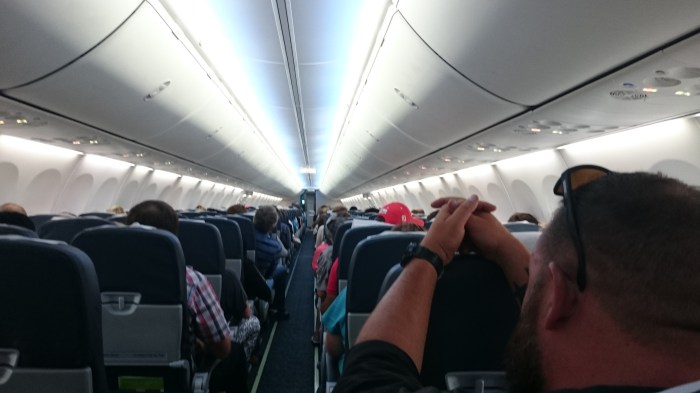
Interestingly enough, IATA proposes that social distancing would be impossible on aircraft. While we know that aircraft aircon systems use HEPA filters, which are similar to those used in hospital operating theatres, it appears that the travelling public is quite suspicious of its efficiency.

What is clear is that for the foreseeable future airline flying will never be the same again.

Sanitising and deep cleaning between flights will become routine, adding time and costs. Wearing of face-masks in airports and on aircraft may become compulsory – crews may look like ICU nurses.

PPE
Phillipines cabin crew in their designer PPE wear.

During flight, passengers’ movement could be restricted – you may well have to “reserve a slot” to use the toilet…

Catering could be another no-no, especially on shorter flights – locally the longest flights are only two hours in duration. On longer flights catering could be pre-packaged and sealed – fancy first-class fare could well be a thing of the past.

Eventually it would boil down to passengers being adult and taking responsibility for their own protection and health.

As for how – and more importantly, when we can expect to get airborne again – the mixed and opaque messages from goverment are not particularly helpful in this regard.

Play it by ear is the only song on our current aviation hit parade – and we’re in it for The long Run!


I’d Rather Fly, Thank you!

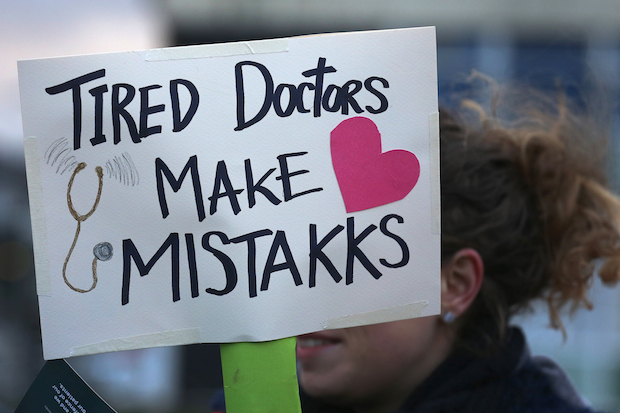
Last week a medical professional had a letter published in the Cape Times. In this he questioned the sanity of rules which allow for doctors working shifts of 30 hours plus, after the death of a young doctor in a fatigue-related crash. (Read the letter here).

Dr John Roos is a passionate advocate of CRM for the medical profession – I have worked with him at the recent ICEM (International Conference for Emergency Medicine) in Cape Town, where we co-presented an introductory workshop on CRM. Just from my anecdotal experience of the medical environment I am aware of the extreme demands on these professionals. Suffice to mention that medical malpractice is now the third largest cause of preventable deaths in the USA – in fact the statistics bear out the fact that you are much more likely to die unnecessarily in hospital than in an airliner:

Lost Lives Med vs Flying

According to the Western Cape Department of Health the regulations approved by the HPCSA (Health Professionals Council of SA) do allow for medical professionals to work shifts of up to 30 hours. (Article here).

Well, I am simply astonished at the Neanderthal system employed in our healthcare!

In Aviation we have been aware of the problem for decades. However, the fact that fatigue is a difficult concept to quantify has also been recognised for years. At a 2006 Paris conference on Aviation Safety hosted by the Flight Safety Foundation, IATA and the International Federation of Airworthiness papers presented pointed out how complex issues affecting pilot fatigue were.

Despite our best efforts at improving aviation safety, we are not out of the woods yet. Flight Global conducted a survey of Aviation Professionals a few years ago (Survey Results) and top of the list was fatigue among safety critical staff such as pilots, engineers and ATC’s.

This despite the fact that maximum hours for flight and duty are clearly defined and rigorously adhered to.

The next step is the legally required implementation of FRM and FRMS programmes, where airlines are required to actively monitor and manage pilots’ fatigue. This would imply identifying potentially fatiguing pairings and reporting on fatigue experiences.

Surely medical personnel must be involved in determining these parameters – yet they seem themselves impervious to the idea that doctors could possibly become fatigued.

So, I would rather fly than take the risk of being assessed or operated on by a fatigued medical practitioner! The stats bear me out.