(Originally published in FMR’s Opus Magazine, May 2024).
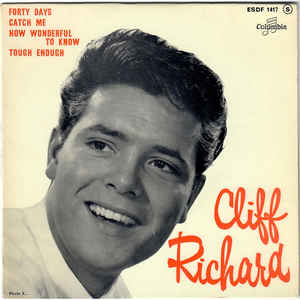
The psychologist Daniel Kahneman recently died aged 90. He won the 2002 Nobel prize for economics, but about the subject he described himself as “mostly cheering … from the sidelines”. He achieved celebrity status in 2011 at the age of 77, and after a lifetime of rigorous academic research with the pop psychology book Thinking, Fast and Slow.
I found Thinking, Fast and Slow very useful for my work in aviation human factors training. Kahneman’s work revealed the extent to which human beings make erroneous judgments in everyday situations and then base often wrong decisions on those judgments. Steven Pinker had called him “the world’s most influential living psychologist”.
One of his first insights came when he was trying to persuade flight instructors that reward was more effective than punishment when training people in new skills. Old-school flight training was pretty much a case of beating discipline into the “stupid” pupil pilot’s head!
Thinking, Fast and Slow proposed that we apprehend the world in two radically opposed ways, employing two fundamentally different modes of thought: “System 1” and “System 2”.
System 1 is fast; it’s intuitive, associative, metaphorical, automatic, impressionistic, and it can’t be switched off. Its operations involve no sense of intentional control, but it’s the “secret author of many of the choices and judgments you make”.
System 2 is slow, deliberate, effortful. Its operations require attention. System 2 takes over, rather unwillingly, when things get difficult.
Gary Klein is another American psychologist I often referred to in human factors training; he developed an aviation decision making model for the US Federal Aviation Administration, based on –what appeared to be – very fast, almost instinctive decision making by pilots. Turns out that, with loads of experience, what appears to be “fast” thinking is actually “applied slow thinking”.
Referring back to last month’s story about the buckets of luck and experience, it reminded me of Gary Player’s famous quote “the harder you work, the luckier you get”.
With pilots, a feat that could look like sheer blind luck would actually be the result of years of slog, training and hard work – lots of System 2 influencing System 1 to make the correct judgement call, leading to the correct decision.
Which is why experienced broadcasters can “think on their feet” when faced with a timing problem or technical dilemma. It may look like fast thinking, but stemming from years of experience (“slow thinking”), it becomes almost intuitive, and muscle memory.
At FMR we often field approaches by would-be presenters, but once in the unforgiving studio environment, faced with the technical challenges and the prospect of actually committing to a regular daily or weekly slot – the confidence and enthusiasm evaporates very quickly.
Believe me, we are very lucky to have very experienced people on air at FMR, and even “luckier” to have these experienced people prepared to share their time, knowledge and experience with our new prospects.
Being new on air is very much a sink-or-swim situation, but we have enough strong hands on deck to help you to stay afloat and breathe, while learning to make those instantaneous decisions!
If you have the inclination to volunteer at FMR, give it a try – in particular we’re looking for contributors to our community programmes.
If you think you have the grit and determination to volunteer, contact us on auditions@fmr.co.za.
It’s incredibly hard work to provide the calm in chaos, but it’s equally rewarding!





 Hangar Talk with Eon
You must be logged in to post a comment.