Sully the Movie – A Pilot’s Perspective

“So what did you think of the movie?”

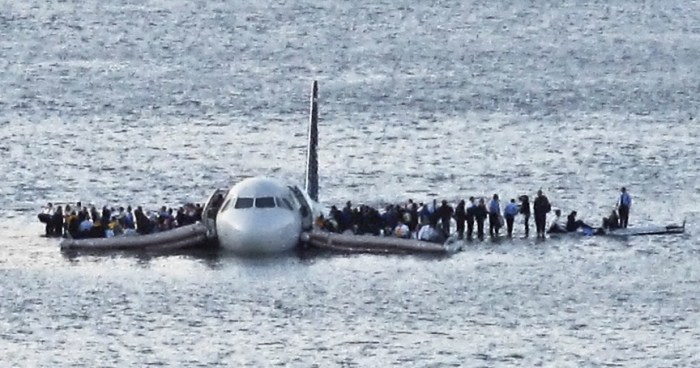
I was immediately faced with that question as I walked out of the screening of Sully, Clint Eastwood’s film about the 2009 landing in the Hudson River, starring Tom Hanks as Captain Chesley “Sully” Sullenberger.

Well, here’s what I think:

Firstly, I thoroughly enjoyed the film for the technical accuracy of the flight and subsequent river landing with very realistic use of CGI. It had to be accurate as so much of the material has already been published. The transcripts of the CVR (Cockpit Voice Recorder)  were already published in Sullenberger’s 2009 book Highest Duty – My Search for What Really Matters, which also told his life story and related the events of the day in great detail.

These CVR recordings lead me to the one aspect I did not appreciate as much – the movie has the CVR played for the first time during the public hearing, while in fact, according to Sullenberger there were only six people present in the audio lab where they first listened to it. But this would not have suited Eastwood’s whole premise for the movie. He built the dramatic edge around the NTSB ruthlessly pursuing Sullenberger and Jeff Skiles, the First Officer (very ably played by Aaron Eckhart). In Eastwood’s mind the NTSB were the bad guys, out to get the good guys – the pilots – who were assumed guilty until proven not guilty.

It bears stating here that any accident investigation by nature is uncompromising. Nothing can simply be assumed and every detail has to be interrogated to arrive at a definitive answer. The objective is not to apportion blame, but to learn and make recommendations to avoid similar events in future.

Sullenberger himself was very clear about the conflict in his own mind – could they possibly have made it back to La Guardia or even Teterboro? Here his whole career of over forty years would be judged on 208 seconds and one decision. I could clearly identify with this self-doubt, something we as professional pilots know well. There is always the nagging worry that something could have been handled better, it is the perfectionist nature of our occupation.

Hanks captures the gravitas of Sullenberger in this situation perfectly. He has proved before that he can deliver empathetic portrayals of men in difficult situations (Apollo 13, Captain Phillips), balancing human frailty with steely resolve.

Sully is a great movie, which caters for a general movie audience who would simply enjoy a rollicking drama of good people conquering adversity. Yet it still satisfies those aviators, who have more than just a passing interest in the dramatic events of January 15th, 2009.

Hopefully the movie will also allow a glimpse into how seriously professional pilots take their occupation – Hanks’s Sullenberger provides the ideal example. His one decision on that day led to 155 souls surviving a dual engine failure and a subsequent forced water landing – pilots daily make hundreds of decisions with less dramatic impact, but which directly affects the lives of passengers worldwide.

Go and see the movie!


Royal Aeronautical Society | Insight Blog | Lives before luggage

I have posted a number of blogs regarding passengers’ apparent disregard for their own safety. As valuable additional reading, here is an insightful blog about evacuations from the RAeS:

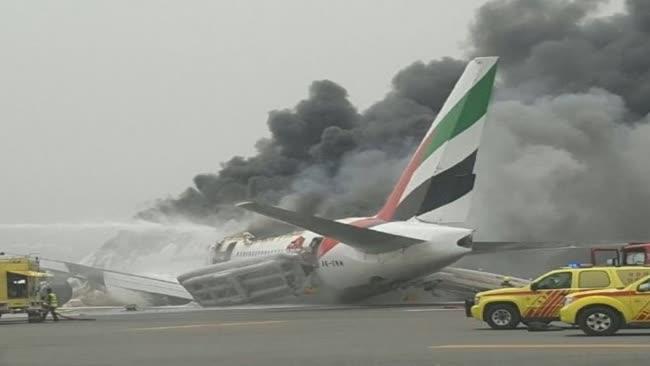
During the recent emergency evacuation of the Emirates 777 which caught fire in Dubai, a number of passengers endangered their safety and those of others by stopping to collect their luggage. BILL READ FRAeS looks at some of the ideas being proposed to prevent such actions reoccurring and how it may be time for a rethink of the regulations governing aircraft emergency evacuations.

Source: Royal Aeronautical Society | Insight Blog | Lives before luggage

Leave Everything Behind! (Exit before Tweeting…)

Yesterday we witnessed the crash of an Emirates B773 at Dubai. I use the word “witnessed” as we may just as well have been eyewitnesses, what with visuals instantly available on the major TV channels, uploaded from social media. Had it happened a few years ago, we would simply not have had access to these dramatic visuals captured by actual eyewitnesses.

(See my previous blogs on the emergency and social media aspects of this phenomenon: Evacuate! Evacuate! Are you ready? and Beware the Jabberwock, my son! ).

What I find disturbing though, are the visuals recorded by passengers during the actual evacuation of EK521, with a life-threatening emergency in full swing:
Pax Evacuation EK521

During many previous aircraft emergencies we’ve witnessed this behaviour before: Cell’phones on, visuals recorded and instantly shared on social media. Allow me to be blunt: This type of behaviour deserves a Darwin Award for Deadly Stupidity!

It would appear that in aviation we’re not alone in this:

1013_in-case-of-fire-exit-building-before-tweeting-about-it_543-720
Pic: socialsmiling.com


So what allows us to exhibit this kind of stupidity? What level of intelligence would allow a normally stable individual to jeopardize not only his/her own life, but the lives of others as well?

I can only assume that it is the same level of intelligence which would allow passengers to blatantly disregard the safety regulations, ignore safety briefings and refuse to obey lawful instructions regarding electronic devices.

The bottom line is that anything which could distract one during an emergency should be avoided at all costs – hence the announcement by cabin crew regarding no cell’phones or headphones before departure or arrival. When the fire is at your heels and the smoke is choking you, that is not the time to worry about your branded hand luggage or your personal effects – that is when saving lives should be your one and only concern.

I know that passenger safety is our single-minded concern. As professional air crew we’ll do everything possible to ensure that, but passengers also have a role to play in their own safety!

However, it would appear that any commonsense, reason and responsibility is zipped up and stowed in the luggage when passengers check in….


Legal, Safe or Wise?

Whenever an aircraft goes down, pilots immediately want to know “what went wrong?”

If the aircraft involved is similar to the type you happen to fly, the interest in possible causes takes on an even more personal imperative. The recent crash of the FlyDubai B738 at Rostov-on Don, Russia lead to much speculation – and as I fly the B738, I obviously took a personal interest in the crash.

The recent interim report by the Russian Authorities provides some insights into the situation leading up to the crash. This preliminary report clearly states that, in accordance with ICAO standards and practices its sole objective is to prevent aviation accidents and no blame or liability is apportioned. The Flight Data Recorder and Cockpit Voice Recorder are still being interpreted and that information will undoubtedly provide further insights into the factors involved.

What is insightful is the final paragraph, which reads:
“For the purpose of preventive measures the investigative team recommends to:”
And then adds 5 recommendations, all relating to the same issue – here summarised in their para.2: “Have additional training on elements of go-arounds in various conditions, in manual control mode with two engines operative from various heights and with insignificant flight weights”.

They also refer to the 2013 B735 crash at Kazan and the 2006 A320 crash near Sochi, stating that the safety recommendations issued by the investigation teams should be “repeatedly studied and analyzed”.

It would thus appear that, at this early stage no malfunctions are reported and that the second go-around ended in a loss of control situation. This led the investigative team to feel that they needed to publish immediate recommendations regarding training.

Just looking at the facts presented: There were 7 crew members and 55 passengers on board, which makes for a very light aircraft. Take-off weight is given as 68 tons. Just doing the simple maths, I would reckon that they had a zero-fuel weight of anywhere between 50 – 55 tons, depending on whether any freight was carried. That would mean that they could have carried anywhere between 13 to 18 tons of fuel. The report does not indicate how much they had, but they flew for just over four hours, made an approach and went around, then held for just over 1 hour and 40 minutes before requesting a second approach. Just using raw numbers, calculating conservatively they had probably used around 12 tons of fuel by then.

So on the second go-around the aircraft would have been very light and at TOGA thrust it would have climbed very rapidly – as indeed indicated in the report.

Both approaches were manually flown using the HUD system. FlyDubai’s B738 airframes are apparently not certified for dual channel approaches and auto-lands, so this would have been according to their SOP’s. (A number of operators prefer this option, probably because of the lower costs associated – pure speculation on my part).

Importantly though, the report states that both approaches were flown “without significant heading or altitude deviations” – in other words, these were well flown approaches.

So it appears to be the go-around that went wrong – and from a Human Factors perspective I would await the final report and CVR analysis with great interest.

I have no idea how long the crew had been on duty, but they had clearly flown for more than 5.5 hours at that stage and were conducting the second approach well after midnight. The report uses Z time, but the local time was just before 04h00. Needless to say, as we know from dire experience – humans are diurnal beings and we do not perform well nocturnally.

Neither do we perform well when tired or fatigued. I have just recently presented a CRM workshop at ICEM 2016 and the emergency medical fraternity were extremely aware of the dangers when humans are tasked to perform in demanding situations while fatigued.

While the preliminary report suggests that training for go-around manoeuvres is required, I sincerely hope that the CRM aspects will be thoroughly investigated when the final report is published.

My own experience in airline operations is that what may be completely legal may not necessarily be safe – nor wise.


Beware the Jabberwock, my son!

“It seems very pretty,” she said when she had finished it, “but it’s rather hard to understand!” (You see she didn’t like to confess, even to herself, that she couldn’t make it out at all.)
– From Through the Looking Glass and what Alice found There, by Lewis Carroll.

Earlier today I had a discussion with a journalist regarding a TV programme about decompression events in aircraft, for which he had done the research. This leads me to my blog’s musings for today: What influence does the crew have on passengers’ experience and their recollections after an incident? We’re not discussing serious accidents here, only the run-of-the-mill events such as go-arounds, diversions, technical problems and, yes – pressurisation problems.

“This is your captain speaking…”

You would hear these words on almost every commercial flight. It is probably the most quoted sentence when passengers discuss their experiences in the air. Yet very few people would be able to tell you what the captain, or the cabin crew for that matter, had actually said. Not always because the announcements sounded like some comedian’s rip off – simply because people do not pay attention.

I’ve discussed passengers’ behaviour during emergencies before (see my previous post Evacuate, Evacuate! Are you ready?) as well as the power of the media in Good News vs Bad News.

What concerns me here is the widely disparate perceptions passengers report after an incident. “Report” is the correct verb here – anyone with a cellphone becomes an instant reporter and social media allow immediate “reports” on events as they unfold.

Unfortunately, most passengers are not experts in matters aviation and, much like Alice we don’t want to confess that we simply have not the faintest idea of what is happening, has just happened or had happened. However, cellphones allow us to become instant and expert commentators.

Phrases such as “near death experience”, “hysterical cabin crew” or “terrified passengers” abound. Snippets of accurate, factual information are few and far between. “Facts” often prove to be completely wrong perceptions – in one recent event a passenger commented that “the person who tweeted this could not have been on the same aircraft!”.

The dangerous reality is that a perfectly safe airline can have its reputation in tatters and face bankruptcy as a result of 140 instant characters.

Most airlines, like most businesses have an online presence and a department dedicated to following social media. They hope to catch the complaints and negative comments, attempting to counter them – essentially damage control. Unfortunately modern humans have an incredibly short attention span and by the time your positive reply hits social media, we are already onto the next 140 characters of interest.

During the QF32 emergency social media declared that the A380 had crashed, even while Captain De Crespigny and his crew were working the problem and getting their passengers back safely. Fortunately the hysteria calmed down once the facts became clear.

Have a look at this YouTube Video clip from News24:

Despite the headline, I think the passengers do not look too concerned – very few are wearing their oxygen masks, most have the time and presence of mind to turn their cellphones on to film the goings-on.  (Just joking – they were on anyway…) There is the sound of a baby crying, understandable as infants cannot equalise quickly and their ears would hurt with any pressure differential.

So where did the reports of “terrified” passengers originate?

Other social media reports indicated trauma and high drama – clearly not everyone was as composed as the people visible in this clip. I saw reports of “oxygen not flowing” – probably from those who forgot the briefing to give a tug to start it flowing.

Which brings me to the role of the crew – all professionals, all trained to deal with these situations. However, although most airlines would provide standard announcements for various events – some pilots and cabin crew are simply better able to communicate and calm frayed nerves.

When United 232 lost all hydraulics and all controls when the no. 2 engine failed catastrophically over Iowa, passengers spoke afterwards about Captain Al Haynes being “firm, but soothing” while informing them via the PA system.

Similar complimentary comments were made about the way the crew of QF32 handled the PA announcements.

QF32 Fire engines
QF 32  (Pic: criticaluncertainties.com)

As pilots we make decisions in difficult situations based on the old A-N-C acronym – Aviate, Navigate, Communicate. Our primary task is to fly the aircraft, whatever the situation. Once the flight path is under control, we need to fly it somewhere – the navigate bit – whether it be to a diversion airfield or to a ditching. Then we tell people what we are doing – ATC, our crew, and when time allows, our passengers.

It would appear that we should improve that last little bit – keeping passengers informed and comforted could avoid most of the negative and destructive social media rants.

In fact, after Captain De Crespigny had debriefed the passengers of QF32, TV crews were eager to record the dramatic stories of survival which these passengers surely had to tell – to their dismay, most of the passengers had no complaints and only praise for the crew.

Pilots train exhaustively for any possible mishap. Dealing with incidents and problems is the easy part  – how you address the passengers when they feel like Alice is a major challenge. However, allowing them to make sense of our “inverted world”, reading in reverse in the mirror could allow them to slay their Jabberwocks and turn the negative experiences and comments into compliments.