Sully the Movie – A Pilot’s Perspective

“So what did you think of the movie?”

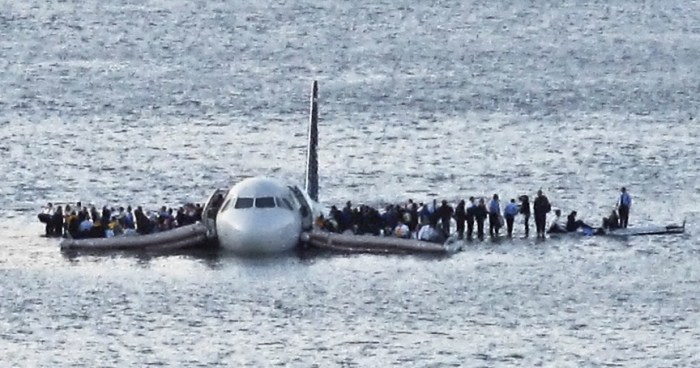
I was immediately faced with that question as I walked out of the screening of Sully, Clint Eastwood’s film about the 2009 landing in the Hudson River, starring Tom Hanks as Captain Chesley “Sully” Sullenberger.

Well, here’s what I think:

Firstly, I thoroughly enjoyed the film for the technical accuracy of the flight and subsequent river landing with very realistic use of CGI. It had to be accurate as so much of the material has already been published. The transcripts of the CVR (Cockpit Voice Recorder)  were already published in Sullenberger’s 2009 book Highest Duty – My Search for What Really Matters, which also told his life story and related the events of the day in great detail.

These CVR recordings lead me to the one aspect I did not appreciate as much – the movie has the CVR played for the first time during the public hearing, while in fact, according to Sullenberger there were only six people present in the audio lab where they first listened to it. But this would not have suited Eastwood’s whole premise for the movie. He built the dramatic edge around the NTSB ruthlessly pursuing Sullenberger and Jeff Skiles, the First Officer (very ably played by Aaron Eckhart). In Eastwood’s mind the NTSB were the bad guys, out to get the good guys – the pilots – who were assumed guilty until proven not guilty.

It bears stating here that any accident investigation by nature is uncompromising. Nothing can simply be assumed and every detail has to be interrogated to arrive at a definitive answer. The objective is not to apportion blame, but to learn and make recommendations to avoid similar events in future.

Sullenberger himself was very clear about the conflict in his own mind – could they possibly have made it back to La Guardia or even Teterboro? Here his whole career of over forty years would be judged on 208 seconds and one decision. I could clearly identify with this self-doubt, something we as professional pilots know well. There is always the nagging worry that something could have been handled better, it is the perfectionist nature of our occupation.

Hanks captures the gravitas of Sullenberger in this situation perfectly. He has proved before that he can deliver empathetic portrayals of men in difficult situations (Apollo 13, Captain Phillips), balancing human frailty with steely resolve.

Sully is a great movie, which caters for a general movie audience who would simply enjoy a rollicking drama of good people conquering adversity. Yet it still satisfies those aviators, who have more than just a passing interest in the dramatic events of January 15th, 2009.

Hopefully the movie will also allow a glimpse into how seriously professional pilots take their occupation – Hanks’s Sullenberger provides the ideal example. His one decision on that day led to 155 souls surviving a dual engine failure and a subsequent forced water landing – pilots daily make hundreds of decisions with less dramatic impact, but which directly affects the lives of passengers worldwide.

Go and see the movie!


Leave Everything Behind! (Exit before Tweeting…)

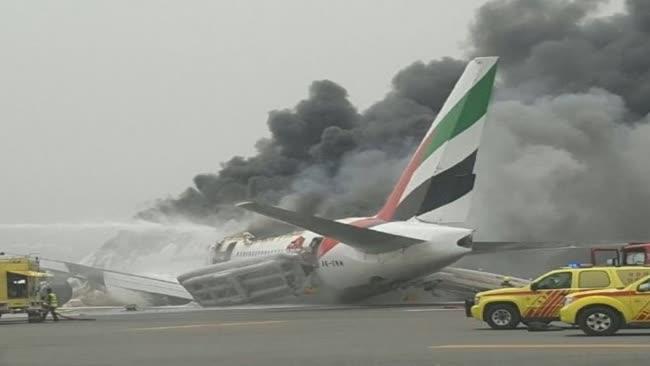
Yesterday we witnessed the crash of an Emirates B773 at Dubai. I use the word “witnessed” as we may just as well have been eyewitnesses, what with visuals instantly available on the major TV channels, uploaded from social media. Had it happened a few years ago, we would simply not have had access to these dramatic visuals captured by actual eyewitnesses.

(See my previous blogs on the emergency and social media aspects of this phenomenon: Evacuate! Evacuate! Are you ready? and Beware the Jabberwock, my son! ).

What I find disturbing though, are the visuals recorded by passengers during the actual evacuation of EK521, with a life-threatening emergency in full swing:
Pax Evacuation EK521

During many previous aircraft emergencies we’ve witnessed this behaviour before: Cell’phones on, visuals recorded and instantly shared on social media. Allow me to be blunt: This type of behaviour deserves a Darwin Award for Deadly Stupidity!

It would appear that in aviation we’re not alone in this:

1013_in-case-of-fire-exit-building-before-tweeting-about-it_543-720
Pic: socialsmiling.com


So what allows us to exhibit this kind of stupidity? What level of intelligence would allow a normally stable individual to jeopardize not only his/her own life, but the lives of others as well?

I can only assume that it is the same level of intelligence which would allow passengers to blatantly disregard the safety regulations, ignore safety briefings and refuse to obey lawful instructions regarding electronic devices.

The bottom line is that anything which could distract one during an emergency should be avoided at all costs – hence the announcement by cabin crew regarding no cell’phones or headphones before departure or arrival. When the fire is at your heels and the smoke is choking you, that is not the time to worry about your branded hand luggage or your personal effects – that is when saving lives should be your one and only concern.

I know that passenger safety is our single-minded concern. As professional air crew we’ll do everything possible to ensure that, but passengers also have a role to play in their own safety!

However, it would appear that any commonsense, reason and responsibility is zipped up and stowed in the luggage when passengers check in….


2016 and the Future for Pilots

Elon Musk predicts that in a couple of years, we will only be driving cars for recreation – transport will be automated.

The RAeS (Royal Aeronautical Society) recently held an interesting debate in London about the future of pilots in aviation. I followed this with great interest and the proposal that we will have pilotless cockpits within forty years was carried with a large majority.

Read any commentary on the current state of commercial aviation, and while it is acknowledged that it is safer than ever before, the general consensus is that pilots have been lulled into complacency by automation and have lost their basic flying skills.

As we kick off 2016, there we have three propositions which, effectively, indicate that we – pilots – are an endangered species. Add to these the advent of drones, which, especially in the military environment can be controlled from thousands of miles away to devastating effect.

Commercial Aviation is safe. In fact, the recently published annual statistics by ASN (Aviation Safety Network) indicate that 2015 was the safest year ever for airliners.

A decade or so ago the major causal factor in commercial aviation accidents was CFIT (Controlled Flight into Terrain). Training and the advent of Enhanced Ground Proximity Warning Systems (EGPWS) countered that trend. During the last decade the major causal factor in airline accidents has proved to be Loss of Control in Flight (LOCI), a fact which supports the contention that pilots are losing their stick and rudder skills.

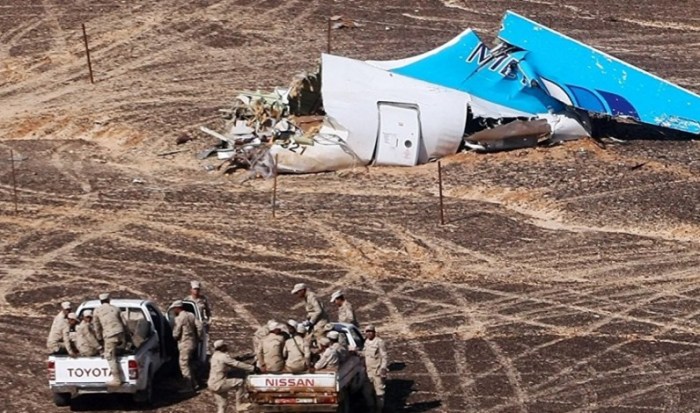
And now we see a new, worrying trend emerging – the 2015 statistics show that most fatalities were a result of only two accidents. 150 people died in the Germanwings disaster on the 24th March 2015 and on the 31st October last year 224 people died when the Metrojet A320 was shot down over Egypt. Both caused by human depravity – not the usual “pilot error” or mechanical failure. The previous year’s Malaysian disasters fit this trend as well – the one shot down and the other still a mystery, but probably downed by dark intentions.

About the shooting down of civilian airliners not much can be said. It is terrorism and depravity of the worst kind. But what about the deliberate crashing of an airliner by the very people who should ensure its safety?

About LOCI we can do something. We can enhance high altitude handling training, we can up the required standards, we can add extra warning systems.

But what can we do about the insidious potential danger of a pilot “losing it” and endangering the aircraft, passengers and fellow crew members?

There lies the challenge for airline managers and their HR departments – the days are gone where pilots would come up through the ranks via the Air Force or contract or charter flying – this would act as a natural sifting process and only the dedicated and flying fit would make it through.

My concern is that modern aviation trends would tend to allow pilots who lack experience or the required resilience into cockpits – perhaps causing more trauma than we would like to imagine.

Unless we can solve this new-found dilemma, the RAeS debate’s outcome could become our future reality.

But would you like to be a passenger on a pilotless aircraft?

One has to question whether a computer would have made the decision to land in the Hudson river, saving all on board. In the case of QF32, where the pilots had to land their overweight and crippled A380 on too short a runway the computers were so confused that they were providing false information.

Despite the fact that Artificial Intelligence is being developed apace, my prediction for 2016 is that we will not see that pilotless flight this year – and frankly, I would hope not for many a year!