“Captain”

“It’s a heavy professional burden on the Captain to know he may be called upon to tap into the depths of his experience, the breadth of his knowledge and his ability to think quickly; weighing everything he knows, while accounting for what he cannot know”. – Capt. Chesley “Sully” Sullenberger.

My work as a Human Factors instructor consists mostly of presenting CRM Initial and Refresher Courses, fitting these in-between flying a full roster as a line pilot. Every now and again however, there is an opportunity to run a Command Upgrade CRM Course for First Officers.

Such was the case again last week, when I did the introductory day for a group of young Kenyan F/O’s and it once again reminded me of the major mindset change required when moving from the right seat to the left seat.

dsc_1344
Six KQ FO’s discovering their behaviour profiles in the Command Upgrade CRM class.

Distance wise it may be a move of less than a metre, but it represents a major change in responsibility.

As Captain Richard Phillips put it: “The Captain is responsible for the crew, the ship and everything on it. Period.” (Richard Phillips was the Captain of the Maersk Alabama, when it was hi-jacked by Somali pirates).

In simple terms, ICAO defines the PIC (Pilot in Command) as “The pilot responsible for the operation and safety of the aircraft during flight time”. That responsibility covers vast areas of legal authority, essentially ensuring that the Captain’s authority overrides almost any other while the aircraft is in motion.

The applicable law may differ slightly from country to country, but in essence it states that the PIC is responsible for:

The operation and safety of the aircraft while he or she is in command;
The conduct and safety of flight crew members and passengers carried, and
The maintenance of discipline by all persons on board.

The PIC furthermore has the authority:

To give such commands he or she deems necessary in the interest of the safety of the aircraft, persons or property, and
To disembark any person or cargo, which in his or her opinion represents a potential hazard to the safety of the aircraft, persons or property.

In short, the buck stops here.

Captain Al Haynes, the hero of United 232 said that as a pilot you can never be ready, but you can be prepared (for any eventuality). And every flight is different, despite the general perception that routine flights become boring and, well, routine.

Flying is like playing the piano: Sometimes you get to sight read a simple Three Blind Mice, other times you have to find your way through sight reading a Bach Toccata and Fugue.

Or as a wise old Captain once said, it’s like playing bridge – you always play with the same 52 cards, but you are dealt a different hand every time.

Then you also fly different aircraft on different routes with different crews – and as any pianist will tell you, different pianos are different to play, requiring some adapting.

But there is a limit to how far you can and should adapt as PIC. You may experience intense pressure from line engineers, management, fellow crews and passengers to accept an aircraft, avoid a delay or push out at all costs. Yet at all times you have to balance that pressure with those imperatives of the law, which gives you the authority as Captain.

Sully Sullenberger put it sagely – as Captain you have the power of the park brake – that aircraft goes nowhere until you decide to release the brake.

As an interesting aside, the term “Captain” for the PIC is attributed to Juan Trippe, founder of Pan Am – he apparently decided that his flying boats deserved “Captains” as on ships. (The flying boats were also where the Pan Am call-sign “Clipper” had originated). Thus the First Pilot became the Captain and the co-pilot became the First Officer. To compete with ocean liners of the day, Pan Am offered first-class seats on their flights, and flight crews’ style became more formal. Instead of being leather-jacketed, silk-scarved airmail pilots, the crews of the “Clippers” wore naval-style uniforms and adopted a set procession when boarding the aircraft – hence our still wearing blue pants and white shirts on the flight deck today.

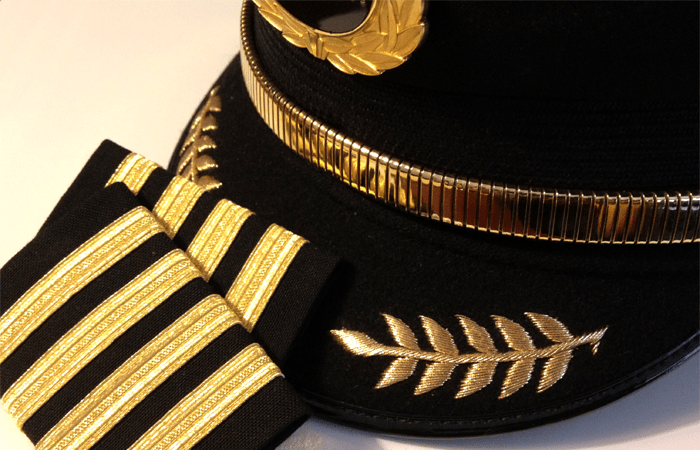
But in the final analysis, the title of Captain would mean absolutely nothing if the pilot wearing those four bars is not willing, capable and able to accept the authority and massive responsibility that comes with the territory.



The Law is an Ass

If the law supposes that,” said Mr. Bumble, squeezing his hat emphatically in both hands, “the law is a ass — a idiot.”
 – Charles Dickens: Oliver Twist –

It would appear that a number of pilots would agree with Mr Bumble (perhaps not in as much as they are unhappy spouses of domineering wives – as Mr Bumble was), but feeling that some laws are applied contrary to common sense.

I find it interesting that the application of law should actually require lawyers, people schooled in law, who could stand in court and argue totally divergent points of view on how the same law should be applied. Often the stated law is interpreted on the intent of the law – clearly an indication that the law is poorly drafted.

Undergrad law students learn that the four principal purposes and functions of the law are establishing standards, maintaining order, resolving disputes, and protecting liberties and rights. The law should be a guidepost for minimally acceptable behaviour in society.

So it should be simple to apply the law, but experience has shown that serial criminals could be absolved and innocent people could become victims of those laws, which should actually protect them. Sometimes the application of the law defies any common sense – perhaps one has to agree with Mr Bumble…

As pilots, we also have to deal with a plethora of laws. While subject to the laws of the land, we are also subject to the various laws as set out in the subdivisions of the Aviation Act. (I’m referring to the South African situation).

The Civil Aviation Technical Standards (CATS) and the Civil Aviation Regulations (CARS) with their many Parts apply in various stages to everything we do in, with and around our aircraft.

In effect, these aviation laws are an extension of the laws of the land and international law setting the guidelines for minimally acceptable behaviour in our society  – and aviation in particular. (We’re back to Law 101 now).

The aviation laws are clear – the interpretation of some laws are perhaps debatable – but the very basic aim is to ensure safety.

However, the laws of nature leave very little space for argument: Newton’s apple will eventually have to succumb to gravity.

Yet we hear daily of pilots defying the laws of nature: overloading aircraft, disregarding density altitudes, flying into adverse weather conditions – the list goes on and on…

Add to this the tendency to feel that “the law is an ass – it doesn’t apply to me, in fact it only applies to others…”.

Here it is instructive to note that in a study overseen by the FAA in an attempt to discover what would make a pilot “accident prone”, they found five common traits in pilots who were prone to having accidents:

  1.  Disdain toward rules.
  2.  High correlation between accidents in their flying records and safety violations in their driving records.
  3. Frequently falling into the personality category of “thrill and adventure seeking”.
  4. Impulsive rather than methodical and disciplined in information gathering and in the speed and selection of actions taken.
  5. Disregard for or under-utilization of outside sources of information, including copilots, flight attendants, flight service personnel, flight instructors and air traffic controllers.

The first trait is probably the most illuminating.

This week I encountered the argument that the skies should be free and that recreational pilots should be left to self-regulate.

I’m afraid that this argument only strengthens the FAA’s first trait of accident prone pilots (above).

The skies would only be “free” if you were the only aircraft around (disregarding your legal obligations to those on the ground and to society), but as soon as two aircraft share the same airspace, some rules need to be applied: Who has right of way, direction of circuits, see-and-avoid, etc.

Whether you regard the law as an ass – or not, please pay heed to what well known flight instructor Rod Machado has to say about aviation law:

“Rules, regulations and SOP’s are symbolic of aviation’s accumulated wisdom. Each one is a historical whisper of errors made, planes lost and limits challenged. Herein lie the posthumous tokens of aviation’s best lessons. They linguistically map out aviation’s hazardous territory. To operate beyond these areas is to thumb our noses at the gods of probability”.

I’d Rather Fly, Thank you!

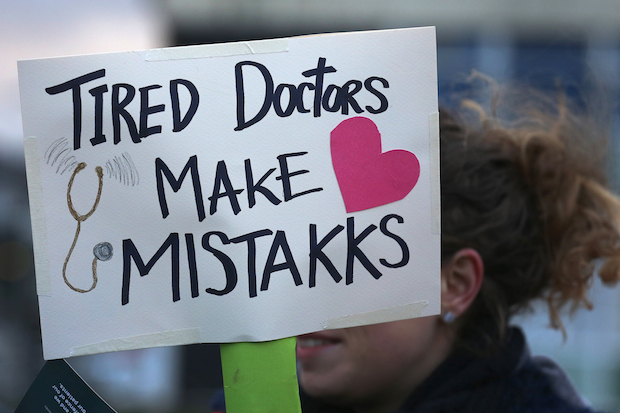
Last week a medical professional had a letter published in the Cape Times. In this he questioned the sanity of rules which allow for doctors working shifts of 30 hours plus, after the death of a young doctor in a fatigue-related crash. (Read the letter here).

Dr John Roos is a passionate advocate of CRM for the medical profession – I have worked with him at the recent ICEM (International Conference for Emergency Medicine) in Cape Town, where we co-presented an introductory workshop on CRM. Just from my anecdotal experience of the medical environment I am aware of the extreme demands on these professionals. Suffice to mention that medical malpractice is now the third largest cause of preventable deaths in the USA – in fact the statistics bear out the fact that you are much more likely to die unnecessarily in hospital than in an airliner:

Lost Lives Med vs Flying

According to the Western Cape Department of Health the regulations approved by the HPCSA (Health Professionals Council of SA) do allow for medical professionals to work shifts of up to 30 hours. (Article here).

Well, I am simply astonished at the Neanderthal system employed in our healthcare!

In Aviation we have been aware of the problem for decades. However, the fact that fatigue is a difficult concept to quantify has also been recognised for years. At a 2006 Paris conference on Aviation Safety hosted by the Flight Safety Foundation, IATA and the International Federation of Airworthiness papers presented pointed out how complex issues affecting pilot fatigue were.

Despite our best efforts at improving aviation safety, we are not out of the woods yet. Flight Global conducted a survey of Aviation Professionals a few years ago (Survey Results) and top of the list was fatigue among safety critical staff such as pilots, engineers and ATC’s.

This despite the fact that maximum hours for flight and duty are clearly defined and rigorously adhered to.

The next step is the legally required implementation of FRM and FRMS programmes, where airlines are required to actively monitor and manage pilots’ fatigue. This would imply identifying potentially fatiguing pairings and reporting on fatigue experiences.

Surely medical personnel must be involved in determining these parameters – yet they seem themselves impervious to the idea that doctors could possibly become fatigued.

So, I would rather fly than take the risk of being assessed or operated on by a fatigued medical practitioner! The stats bear me out.


Legal, Safe or Wise?

Whenever an aircraft goes down, pilots immediately want to know “what went wrong?”

If the aircraft involved is similar to the type you happen to fly, the interest in possible causes takes on an even more personal imperative. The recent crash of the FlyDubai B738 at Rostov-on Don, Russia lead to much speculation – and as I fly the B738, I obviously took a personal interest in the crash.

The recent interim report by the Russian Authorities provides some insights into the situation leading up to the crash. This preliminary report clearly states that, in accordance with ICAO standards and practices its sole objective is to prevent aviation accidents and no blame or liability is apportioned. The Flight Data Recorder and Cockpit Voice Recorder are still being interpreted and that information will undoubtedly provide further insights into the factors involved.

What is insightful is the final paragraph, which reads:
“For the purpose of preventive measures the investigative team recommends to:”
And then adds 5 recommendations, all relating to the same issue – here summarised in their para.2: “Have additional training on elements of go-arounds in various conditions, in manual control mode with two engines operative from various heights and with insignificant flight weights”.

They also refer to the 2013 B735 crash at Kazan and the 2006 A320 crash near Sochi, stating that the safety recommendations issued by the investigation teams should be “repeatedly studied and analyzed”.

It would thus appear that, at this early stage no malfunctions are reported and that the second go-around ended in a loss of control situation. This led the investigative team to feel that they needed to publish immediate recommendations regarding training.

Just looking at the facts presented: There were 7 crew members and 55 passengers on board, which makes for a very light aircraft. Take-off weight is given as 68 tons. Just doing the simple maths, I would reckon that they had a zero-fuel weight of anywhere between 50 – 55 tons, depending on whether any freight was carried. That would mean that they could have carried anywhere between 13 to 18 tons of fuel. The report does not indicate how much they had, but they flew for just over four hours, made an approach and went around, then held for just over 1 hour and 40 minutes before requesting a second approach. Just using raw numbers, calculating conservatively they had probably used around 12 tons of fuel by then.

So on the second go-around the aircraft would have been very light and at TOGA thrust it would have climbed very rapidly – as indeed indicated in the report.

Both approaches were manually flown using the HUD system. FlyDubai’s B738 airframes are apparently not certified for dual channel approaches and auto-lands, so this would have been according to their SOP’s. (A number of operators prefer this option, probably because of the lower costs associated – pure speculation on my part).

Importantly though, the report states that both approaches were flown “without significant heading or altitude deviations” – in other words, these were well flown approaches.

So it appears to be the go-around that went wrong – and from a Human Factors perspective I would await the final report and CVR analysis with great interest.

I have no idea how long the crew had been on duty, but they had clearly flown for more than 5.5 hours at that stage and were conducting the second approach well after midnight. The report uses Z time, but the local time was just before 04h00. Needless to say, as we know from dire experience – humans are diurnal beings and we do not perform well nocturnally.

Neither do we perform well when tired or fatigued. I have just recently presented a CRM workshop at ICEM 2016 and the emergency medical fraternity were extremely aware of the dangers when humans are tasked to perform in demanding situations while fatigued.

While the preliminary report suggests that training for go-around manoeuvres is required, I sincerely hope that the CRM aspects will be thoroughly investigated when the final report is published.

My own experience in airline operations is that what may be completely legal may not necessarily be safe – nor wise.


Beware the Jabberwock, my son!

“It seems very pretty,” she said when she had finished it, “but it’s rather hard to understand!” (You see she didn’t like to confess, even to herself, that she couldn’t make it out at all.)
– From Through the Looking Glass and what Alice found There, by Lewis Carroll.

Earlier today I had a discussion with a journalist regarding a TV programme about decompression events in aircraft, for which he had done the research. This leads me to my blog’s musings for today: What influence does the crew have on passengers’ experience and their recollections after an incident? We’re not discussing serious accidents here, only the run-of-the-mill events such as go-arounds, diversions, technical problems and, yes – pressurisation problems.

“This is your captain speaking…”

You would hear these words on almost every commercial flight. It is probably the most quoted sentence when passengers discuss their experiences in the air. Yet very few people would be able to tell you what the captain, or the cabin crew for that matter, had actually said. Not always because the announcements sounded like some comedian’s rip off – simply because people do not pay attention.

I’ve discussed passengers’ behaviour during emergencies before (see my previous post Evacuate, Evacuate! Are you ready?) as well as the power of the media in Good News vs Bad News.

What concerns me here is the widely disparate perceptions passengers report after an incident. “Report” is the correct verb here – anyone with a cellphone becomes an instant reporter and social media allow immediate “reports” on events as they unfold.

Unfortunately, most passengers are not experts in matters aviation and, much like Alice we don’t want to confess that we simply have not the faintest idea of what is happening, has just happened or had happened. However, cellphones allow us to become instant and expert commentators.

Phrases such as “near death experience”, “hysterical cabin crew” or “terrified passengers” abound. Snippets of accurate, factual information are few and far between. “Facts” often prove to be completely wrong perceptions – in one recent event a passenger commented that “the person who tweeted this could not have been on the same aircraft!”.

The dangerous reality is that a perfectly safe airline can have its reputation in tatters and face bankruptcy as a result of 140 instant characters.

Most airlines, like most businesses have an online presence and a department dedicated to following social media. They hope to catch the complaints and negative comments, attempting to counter them – essentially damage control. Unfortunately modern humans have an incredibly short attention span and by the time your positive reply hits social media, we are already onto the next 140 characters of interest.

During the QF32 emergency social media declared that the A380 had crashed, even while Captain De Crespigny and his crew were working the problem and getting their passengers back safely. Fortunately the hysteria calmed down once the facts became clear.

Have a look at this YouTube Video clip from News24:

Despite the headline, I think the passengers do not look too concerned – very few are wearing their oxygen masks, most have the time and presence of mind to turn their cellphones on to film the goings-on.  (Just joking – they were on anyway…) There is the sound of a baby crying, understandable as infants cannot equalise quickly and their ears would hurt with any pressure differential.

So where did the reports of “terrified” passengers originate?

Other social media reports indicated trauma and high drama – clearly not everyone was as composed as the people visible in this clip. I saw reports of “oxygen not flowing” – probably from those who forgot the briefing to give a tug to start it flowing.

Which brings me to the role of the crew – all professionals, all trained to deal with these situations. However, although most airlines would provide standard announcements for various events – some pilots and cabin crew are simply better able to communicate and calm frayed nerves.

When United 232 lost all hydraulics and all controls when the no. 2 engine failed catastrophically over Iowa, passengers spoke afterwards about Captain Al Haynes being “firm, but soothing” while informing them via the PA system.

Similar complimentary comments were made about the way the crew of QF32 handled the PA announcements.

QF32 Fire engines
QF 32  (Pic: criticaluncertainties.com)

As pilots we make decisions in difficult situations based on the old A-N-C acronym – Aviate, Navigate, Communicate. Our primary task is to fly the aircraft, whatever the situation. Once the flight path is under control, we need to fly it somewhere – the navigate bit – whether it be to a diversion airfield or to a ditching. Then we tell people what we are doing – ATC, our crew, and when time allows, our passengers.

It would appear that we should improve that last little bit – keeping passengers informed and comforted could avoid most of the negative and destructive social media rants.

In fact, after Captain De Crespigny had debriefed the passengers of QF32, TV crews were eager to record the dramatic stories of survival which these passengers surely had to tell – to their dismay, most of the passengers had no complaints and only praise for the crew.

Pilots train exhaustively for any possible mishap. Dealing with incidents and problems is the easy part  – how you address the passengers when they feel like Alice is a major challenge. However, allowing them to make sense of our “inverted world”, reading in reverse in the mirror could allow them to slay their Jabberwocks and turn the negative experiences and comments into compliments.