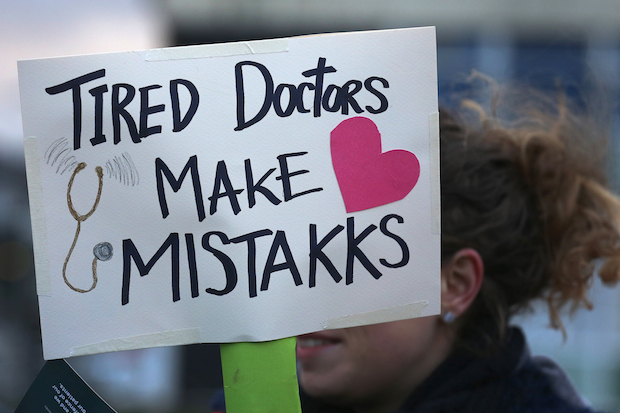
Last week a medical professional had a letter published in the Cape Times. In this he questioned the sanity of rules which allow for doctors working shifts of 30 hours plus, after the death of a young doctor in a fatigue-related crash. (Read the letter here).
Dr John Roos is a passionate advocate of CRM for the medical profession – I have worked with him at the recent ICEM (International Conference for Emergency Medicine) in Cape Town, where we co-presented an introductory workshop on CRM. Just from my anecdotal experience of the medical environment I am aware of the extreme demands on these professionals. Suffice to mention that medical malpractice is now the third largest cause of preventable deaths in the USA – in fact the statistics bear out the fact that you are much more likely to die unnecessarily in hospital than in an airliner:
According to the Western Cape Department of Health the regulations approved by the HPCSA (Health Professionals Council of SA) do allow for medical professionals to work shifts of up to 30 hours. (Article here).
Well, I am simply astonished at the Neanderthal system employed in our healthcare!
In Aviation we have been aware of the problem for decades. However, the fact that fatigue is a difficult concept to quantify has also been recognised for years. At a 2006 Paris conference on Aviation Safety hosted by the Flight Safety Foundation, IATA and the International Federation of Airworthiness papers presented pointed out how complex issues affecting pilot fatigue were.
Despite our best efforts at improving aviation safety, we are not out of the woods yet. Flight Global conducted a survey of Aviation Professionals a few years ago (Survey Results) and top of the list was fatigue among safety critical staff such as pilots, engineers and ATC’s.
This despite the fact that maximum hours for flight and duty are clearly defined and rigorously adhered to.
The next step is the legally required implementation of FRM and FRMS programmes, where airlines are required to actively monitor and manage pilots’ fatigue. This would imply identifying potentially fatiguing pairings and reporting on fatigue experiences.
Surely medical personnel must be involved in determining these parameters – yet they seem themselves impervious to the idea that doctors could possibly become fatigued.
So, I would rather fly than take the risk of being assessed or operated on by a fatigued medical practitioner! The stats bear me out.
Whenever an aircraft goes down, pilots immediately want to know “what went wrong?”
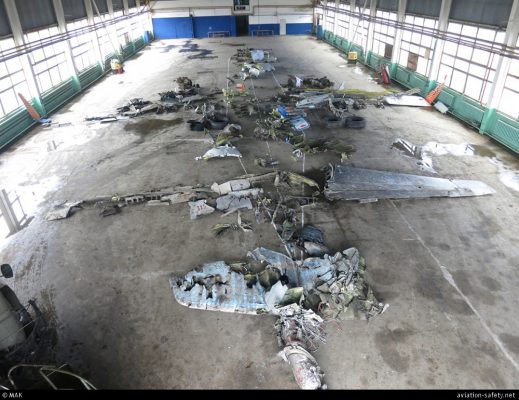
If the aircraft involved is similar to the type you happen to fly, the interest in possible causes takes on an even more personal imperative. The recent crash of the FlyDubai B738 at Rostov-on Don, Russia lead to much speculation – and as I fly the B738, I obviously took a personal interest in the crash.
The recent interim report by the Russian Authorities provides some insights into the situation leading up to the crash. This preliminary report clearly states that, in accordance with ICAO standards and practices its sole objective is to prevent aviation accidents and no blame or liability is apportioned. The Flight Data Recorder and Cockpit Voice Recorder are still being interpreted and that information will undoubtedly provide further insights into the factors involved.
What is insightful is the final paragraph, which reads: “For the purpose of preventive measures the investigative team recommends to:”
And then adds 5 recommendations, all relating to the same issue – here summarised in their para.2: “Have additional training on elements of go-arounds in various conditions, in manual control mode with two engines operative from various heights and with insignificant flight weights”.
They also refer to the 2013 B735 crash at Kazan and the 2006 A320 crash near Sochi, stating that the safety recommendations issued by the investigation teams should be “repeatedly studied and analyzed”.
It would thus appear that, at this early stage no malfunctions are reported and that the second go-around ended in a loss of control situation. This led the investigative team to feel that they needed to publish immediate recommendations regarding training.
Just looking at the facts presented: There were 7 crew members and 55 passengers on board, which makes for a very light aircraft. Take-off weight is given as 68 tons. Just doing the simple maths, I would reckon that they had a zero-fuel weight of anywhere between 50 – 55 tons, depending on whether any freight was carried. That would mean that they could have carried anywhere between 13 to 18 tons of fuel. The report does not indicate how much they had, but they flew for just over four hours, made an approach and went around, then held for just over 1 hour and 40 minutes before requesting a second approach. Just using raw numbers, calculating conservatively they had probably used around 12 tons of fuel by then.
So on the second go-around the aircraft would have been very light and at TOGA thrust it would have climbed very rapidly – as indeed indicated in the report.
Both approaches were manually flown using the HUD system. FlyDubai’s B738 airframes are apparently not certified for dual channel approaches and auto-lands, so this would have been according to their SOP’s. (A number of operators prefer this option, probably because of the lower costs associated – pure speculation on my part).
Importantly though, the report states that both approaches were flown “without significant heading or altitude deviations” – in other words, these were well flown approaches.
So it appears to be the go-around that went wrong – and from a Human Factors perspective I would await the final report and CVR analysis with great interest.
I have no idea how long the crew had been on duty, but they had clearly flown for more than 5.5 hours at that stage and were conducting the second approach well after midnight. The report uses Z time, but the local time was just before 04h00. Needless to say, as we know from dire experience – humans are diurnal beings and we do not perform well nocturnally.
Neither do we perform well when tired or fatigued. I have just recently presented a CRM workshop at ICEM 2016 and the emergency medical fraternity were extremely aware of the dangers when humans are tasked to perform in demanding situations while fatigued.
While the preliminary report suggests that training for go-around manoeuvres is required, I sincerely hope that the CRM aspects will be thoroughly investigated when the final report is published.
My own experience in airline operations is that what may be completely legal may not necessarily be safe – nor wise.
If you want to build a ship, don’t drum up the men to gather wood, divide the work and give orders. Instead, teach them to yearn for the vast and endless sea. Antoine de St. Exupery – The Wisdom of the Sands
A few weeks ago I was interviewed for a newspaper article and the old question came up again: “Why do you fly?”
I gave the standard vague answer about the different dimensions, the challenges, the joys – and that I simply have to fly.
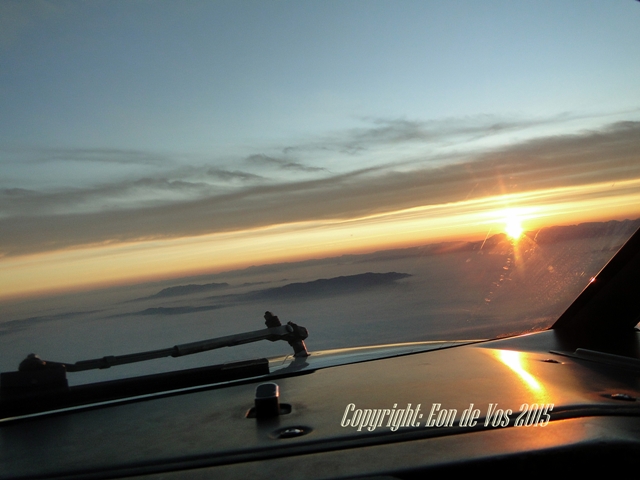
Then, during an early morning departure out of Cape Town the answer came to me, when both the FO and I grabbed our cameras and snapped away to capture the beauty of the early morning fog reflecting the flaming hues, with the stark mountaintops protruding through the low cotton-cloud to be bathed in brilliant sunshine.
Just another departure, another sunrise – but we were captured, captured yet again by the intense beauty. This coupled to the sense of control, balance, power and achievement – and then I realised: We do what we do because it sets us apart. Its that constant yearning for the next horison. Or to paraphrase St. Exupery – that yearning for the vast and endless sky.
I don’t think an auditor would snap pictures of numbers to share on social media – “Hey, look at these books I’m doing today!” Or a lawyer dealing with yet another divorce, or a doctor dealing with another case of the common flu….
People in other occupations share their holiday pictures – “Hey, here we are at this exotic location! Having a great time! Cost a fortune!”
We do that too, but it is our work and our workplace which captures the imagination. We just snap an ordinary day at work and people react in amazement – “Stunning, you’re so lucky…”
That’s what sets us apart – we’re lucky. We enjoy what we do, we love what we do and we would not want to do anything else.
I know it’s not always a bed of roses. Sometimes life’s curved balls make different demands on us – but for the instinctive pilot giving up on flying is not a consideration. Inevitable it may eventually become, but the longer we can postpone the giving up, the loss of license, the retirement, the better.
Because there is always another horizon to cross, another aircraft to fly, another exotic memory to add!
“It seems very pretty,” she said when she had finished it, “but it’s rather hard to understand!” (You see she didn’t like to confess, even to herself, that she couldn’t make it out at all.)
– From Through the Looking Glass and what Alice found There, by Lewis Carroll.
Earlier today I had a discussion with a journalist regarding a TV programme about decompression events in aircraft, for which he had done the research. This leads me to my blog’s musings for today: What influence does the crew have on passengers’ experience and their recollections after an incident? We’re not discussing serious accidents here, only the run-of-the-mill events such as go-arounds, diversions, technical problems and, yes – pressurisation problems.
“This is your captain speaking…”
You would hear these words on almost every commercial flight. It is probably the most quoted sentence when passengers discuss their experiences in the air. Yet very few people would be able to tell you what the captain, or the cabin crew for that matter, had actually said. Not always because the announcements sounded like some comedian’s rip off – simply because people do not pay attention.
I’ve discussed passengers’ behaviour during emergencies before (see my previous post Evacuate, Evacuate! Are you ready?) as well as the power of the media in Good News vs Bad News.
What concerns me here is the widely disparate perceptions passengers report after an incident. “Report” is the correct verb here – anyone with a cellphone becomes an instant reporter and social media allow immediate “reports” on events as they unfold.
Unfortunately, most passengers are not experts in matters aviation and, much like Alice we don’t want to confess that we simply have not the faintest idea of what is happening, has just happened or had happened. However, cellphones allow us to become instant and expert commentators.
Phrases such as “near death experience”, “hysterical cabin crew” or “terrified passengers” abound. Snippets of accurate, factual information are few and far between. “Facts” often prove to be completely wrong perceptions – in one recent event a passenger commented that “the person who tweeted this could not have been on the same aircraft!”.
The dangerous reality is that a perfectly safe airline can have its reputation in tatters and face bankruptcy as a result of 140 instant characters.
Most airlines, like most businesses have an online presence and a department dedicated to following social media. They hope to catch the complaints and negative comments, attempting to counter them – essentially damage control. Unfortunately modern humans have an incredibly short attention span and by the time your positive reply hits social media, we are already onto the next 140 characters of interest.
During the QF32 emergency social media declared that the A380 had crashed, even while Captain De Crespigny and his crew were working the problem and getting their passengers back safely. Fortunately the hysteria calmed down once the facts became clear.
Have a look at this YouTube Video clip from News24:
Despite the headline, I think the passengers do not look too concerned – very few are wearing their oxygen masks, most have the time and presence of mind to turn their cellphones on to film the goings-on. (Just joking – they were on anyway…) There is the sound of a baby crying, understandable as infants cannot equalise quickly and their ears would hurt with any pressure differential.
So where did the reports of “terrified” passengers originate?
Other social media reports indicated trauma and high drama – clearly not everyone was as composed as the people visible in this clip. I saw reports of “oxygen not flowing” – probably from those who forgot the briefing to give a tug to start it flowing.
Which brings me to the role of the crew – all professionals, all trained to deal with these situations. However, although most airlines would provide standard announcements for various events – some pilots and cabin crew are simply better able to communicate and calm frayed nerves.
When United 232 lost all hydraulics and all controls when the no. 2 engine failed catastrophically over Iowa, passengers spoke afterwards about Captain Al Haynes being “firm, but soothing” while informing them via the PA system.
Similar complimentary comments were made about the way the crew of QF32 handled the PA announcements.
QF 32 (Pic: criticaluncertainties.com)
As pilots we make decisions in difficult situations based on the old A-N-C acronym – Aviate, Navigate, Communicate. Our primary task is to fly the aircraft, whatever the situation. Once the flight path is under control, we need to fly it somewhere – the navigate bit – whether it be to a diversion airfield or to a ditching. Then we tell people what we are doing – ATC, our crew, and when time allows, our passengers.
It would appear that we should improve that last little bit – keeping passengers informed and comforted could avoid most of the negative and destructive social media rants.
In fact, after Captain De Crespigny had debriefed the passengers of QF32, TV crews were eager to record the dramatic stories of survival which these passengers surely had to tell – to their dismay, most of the passengers had no complaints and only praise for the crew.
Pilots train exhaustively for any possible mishap. Dealing with incidents and problems is the easy part – how you address the passengers when they feel like Alice is a major challenge. However, allowing them to make sense of our “inverted world”, reading in reverse in the mirror could allow them to slay their Jabberwocks and turn the negative experiences and comments into compliments.
Elon Musk predicts that in a couple of years, we will only be driving cars for recreation – transport will be automated.
The RAeS (Royal Aeronautical Society) recently held an interesting debate in London about the future of pilots in aviation. I followed this with great interest and the proposal that we will have pilotless cockpits within forty years was carried with a large majority.
Read any commentary on the current state of commercial aviation, and while it is acknowledged that it is safer than ever before, the general consensus is that pilots have been lulled into complacency by automation and have lost their basic flying skills.
As we kick off 2016, there we have three propositions which, effectively, indicate that we – pilots – are an endangered species. Add to these the advent of drones, which, especially in the military environment can be controlled from thousands of miles away to devastating effect.
Commercial Aviation is safe. In fact, the recently published annual statistics by ASN (Aviation Safety Network) indicate that 2015 was the safest year ever for airliners.
A decade or so ago the major causal factor in commercial aviation accidents was CFIT (Controlled Flight into Terrain). Training and the advent of Enhanced Ground Proximity Warning Systems (EGPWS) countered that trend. During the last decade the major causal factor in airline accidents has proved to be Loss of Control in Flight (LOCI), a fact which supports the contention that pilots are losing their stick and rudder skills.
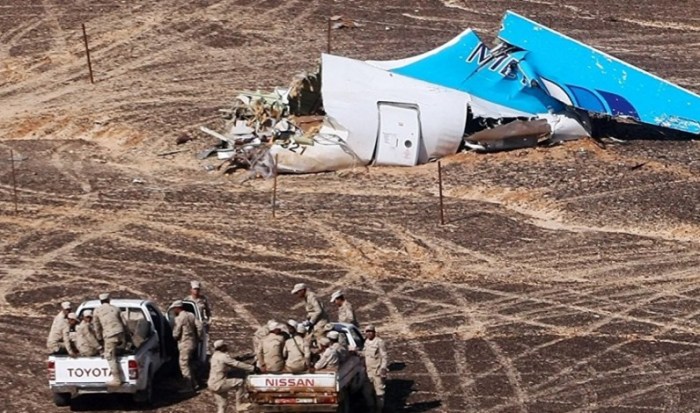
And now we see a new, worrying trend emerging – the 2015 statistics show that most fatalities were a result of only two accidents. 150 people died in the Germanwings disaster on the 24th March 2015 and on the 31st October last year 224 people died when the Metrojet A320 was shot down over Egypt. Both caused by human depravity – not the usual “pilot error” or mechanical failure. The previous year’s Malaysian disasters fit this trend as well – the one shot down and the other still a mystery, but probably downed by dark intentions.
About the shooting down of civilian airliners not much can be said. It is terrorism and depravity of the worst kind. But what about the deliberate crashing of an airliner by the very people who should ensure its safety?
About LOCI we can do something. We can enhance high altitude handling training, we can up the required standards, we can add extra warning systems.
But what can we do about the insidious potential danger of a pilot “losing it” and endangering the aircraft, passengers and fellow crew members?
There lies the challenge for airline managers and their HR departments – the days are gone where pilots would come up through the ranks via the Air Force or contract or charter flying – this would act as a natural sifting process and only the dedicated and flying fit would make it through.
My concern is that modern aviation trends would tend to allow pilots who lack experience or the required resilience into cockpits – perhaps causing more trauma than we would like to imagine.
Unless we can solve this new-found dilemma, the RAeS debate’s outcome could become our future reality.
But would you like to be a passenger on a pilotless aircraft?
One has to question whether a computer would have made the decision to land in the Hudson river, saving all on board. In the case of QF32, where the pilots had to land their overweight and crippled A380 on too short a runway the computers were so confused that they were providing false information.
Despite the fact that Artificial Intelligence is being developed apace, my prediction for 2016 is that we will not see that pilotless flight this year – and frankly, I would hope not for many a year!





 Hangar Talk with Eon
You must be logged in to post a comment.