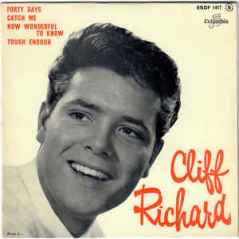
“I’m gonna give you Forty Days” sang Cliff Richard all those years ago. But we have not made it back yet – and forty days have come and gone.
Fifty days – that’s how long we’ve now been under lockdown in South Africa.
For aircrew this could spell a multitude of problems, not least of which is the fact that most pilots and cabin crew are currently on unpaid leave. This loss of income has severe ramifications for many and it cannot be sustained for much longer.
That aside – despite the SACAA’s extension of licenses and ratings to the end of June, other implications could be as severe.
Among these is the requirement for recency and currency – some airlines require a check-flight after 30 days without flying. Problem is, check-captains and instructors need the same, so they would have to regain currency in the simulator before doing any check-flying.
This may not be as easy as it sounds – we currently have no idea when flying will be allowed again and at what level. We can only assume that moving to Level 3 restrictions would allow for training and very restricted flights. But, should the nightly 20h00 – 05h00 curfew remain in place, (which appears to be the case under Level 3 restrictions), just imagine trying to schedule all training only during daylight hours – bearing in mind travel time before and after such simulator sessions. For airlines without their own simulators, finding and hiring time on simulators may initially be almost impossible – potentially delaying their return to training. Remember that the closed borders currently restrict international travel, which means that only local simulators (of which there are not that many) may be available.
Hopefully the restrictions on flying and flight training will not last another 40 days, at which stage the 90 day recency and currency regulations would mean that every airline pilot would have to do a simulator session before even touching an aircraft.
When we finally do start flying, albeit limited in frequency and routes, stored aircaft would have to be brought out of mothballs, checked, signed out and possibly test flown before doing any commercial flights. This could turn into a lengthy process.
Looking at IATA’s projections for the recovery of commercial aviation, we’re in for a long and slow recovery.
Interestingly enough, IATA proposes that social distancing would be impossible on aircraft. While we know that aircraft aircon systems use HEPA filters, which are similar to those used in hospital operating theatres, it appears that the travelling public is quite suspicious of its efficiency.
What is clear is that for the foreseeable future airline flying will never be the same again.
Sanitising and deep cleaning between flights will become routine, adding time and costs. Wearing of face-masks in airports and on aircraft may become compulsory – crews may look like ICU nurses.

During flight, passengers’ movement could be restricted – you may well have to “reserve a slot” to use the toilet…
Catering could be another no-no, especially on shorter flights – locally the longest flights are only two hours in duration. On longer flights catering could be pre-packaged and sealed – fancy first-class fare could well be a thing of the past.
Eventually it would boil down to passengers being adult and taking responsibility for their own protection and health.
As for how – and more importantly, when we can expect to get airborne again – the mixed and opaque messages from goverment are not particularly helpful in this regard.
Play it by ear is the only song on our current aviation hit parade – and we’re in it for The long Run!

 Hangar Talk with Eon