Safety – Attending Funerals, or Walking Away.

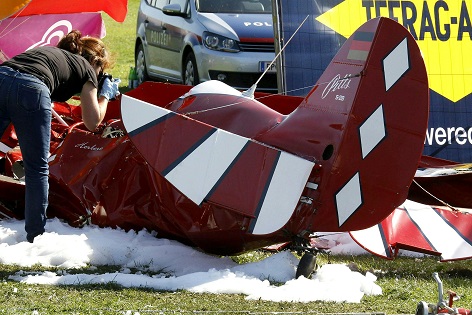
Over the many years that I have been involved in aviation I have had to attend far too many funerals of fellow pilots. Disregarding the few who died of natural or some non-aviation causes, most of them had perished because of an aerobatic manoeuvre that went wrong, flying into terrain while scud-running, or running out of fuel and then attempting a botched forced lob. I know of only one where the aircraft had suffered an in-flight breakup and that was as a result of homemade modifications causing flutter at near VNE.

With the commiserations over, the post funeral discussions would inevitably focus on “what went wrong” and the one oft-repeated statement would be: “I saw that coming”.

If we could “see it coming”, it would imply that the dead pilot had flown in a similar way before, had fallen out of that manoeuvre before, pushed the limits with scud-running before – in short, we acknowledge that we did have the opportunity to intervene. Had we not missed the opportunity to intervene, we may well have saved our friend’s life.

Perhaps if we and our dead friend had the opportunity to understand risk management and human factors a little better than the very basic level offered in the PPL and CPL courses, perhaps that could also have influenced our and his/her behaviour.

This is the basis for CRM: It is simply an attempt to allow humans to interact with sophisticated machinery and with other humans in a demanding environment – and to do so safely.

Do you regard the concept of CRM for General Aviation pilots as some mumbo-jumbo waste of time which only allows some individuals to make money from a CAA regulation? I have in fact received such responses from pilots, even from some ostensibly professional ones. The argument goes along the lines that CRM is the domain of airline pilots and it can only be applicable in a multi-crew environment.

I would argue that this points to a lack of understanding of the basic tenets of aviation, which are safety and professionalism. Please note that “professionalism” does not require four bars or a full-time paid pilot’s occupation, but implies a shared ethos, pride and training to an acceptable standard. Whether GA pilots or aviation professionals, we all share:

  • A wide range of required specialised skills.
  • A need for good judgment.
  • A need for recurrent training and proficiency.
  • A direct responsibility for the well-being of others.
  • Serious consequences for any mistake or misconduct.

    Allow me to start at the very beginning: Being a safe and professional aviator requires three things – Knowledge, Skill and Attitude.

Knowledge and skill are simply non-negotiable in aviation. When you hold a flying licence, whether a SPL or ATPL, you should be able to demonstrate the level of knowledge and skill required for that licence. So here is the question: Would you pass knowledge and skills tests at the required level today?

For any CRM programme to be effective the pilot or crew involved must be fully current and proficient. No amount of CRM or any other intervention will save your bacon if the required knowledge and skill is absent.

Do you have sweaty palms and feel dread and apprehension when the DE starts talking about simulated engine failures, limited panel and (heaven forbid) taboos such as stall/spin events? Why should we bother with those exercises, when our aircraft has all the latest GPS, glass cockpit and autopilot gadgets? We know the story: “I don’t really want to fly serious IF and do ILS approaches. All I actually want to do is flying to my pad at the coast with a makeshift letdown through the thin layer of cloud, led by the GPS on autopilot…”

“Risk increases when the pilot believes the gadgets compensate for lack of skill and knowledge.” This statement from the FAA sums it all up neatly. (Ref. FAA Risk Management Handbook, Chapter 7, p 7-10).

We see this in the field of commercial aviation as well – where young 200hr F/O’s are shoehorned into sophisticated airliner cockpits, able to programme the flight management computers and fly on autopilot. But there is a dire lack of the required resilience to deal with emergencies and especially to deal with “black swan” events. To my mind this lack of experience and training is one of the major reasons why “Loss of Control” currently is the major cause of airliner accidents.

Back to GA – I am of the opinion that we are witnessing a drop in training standards and a subsequent drop in the required knowledge and skills in General Aviation. Perhaps another way of stating this is that modern aviation requires a different training approach to achieve higher standards than before. Was this not the case, we would not see the steadily increasing accident statistics.

Looking at the number of airspace incursions reported recently (I have heard reports of about 30 incursions in two weeks) it clearly points to a lack of knowledge.

Many of the accidents point to simple lack of skill: James Godden, head of Santam Aviation, states in one of their adverts that they receive on average 40 accident related insurance claims per month, with 50% of all claims being made up of landing accidents. Landing short, fast, deep, overruns and excursions – we can blame the crosswind, but it simply shows a lack of skill in mastering anything more than benign conditions.

It also points to a lack of knowledge – perhaps the conditions were out of limits for the aircraft, or the runway was too short, closed or contaminated….

Add the other usual causes of accidents – flying into IMC without the required IF rating; overloading the aircraft, fuel mismanagement, low flying – and we see a combination of lack of knowledge and lack of skill.

Regarding accidents, we are at this stage of 2015 well past the number of fatal accidents of the previous few years.

At least we could correct this to some extent. Better oversight, better training – and then what? The one thing we cannot train is attitude, the one variable which is undoubtedly responsible for the decline in GA standards.

Attitude

The South African attitude problem is wider than just aviation. To paraphrase a quote from Guy Leitch of SA Flyer Magazine: South Africans live with a “frontier mentality” – we daily face a “wild west” of problems such as crime, corruption and failing services. This leads us to disregard rules and regulations and write our own rules – an attitude which spills over into our flying and allows us to underestimate the risks involved.

Dr. Nicklas Dahlstrom, Human Factors Manager of Emirates Airlines observed after visiting South Africa:

“ In a country where you live behind fences and bars, where a car breaking down may mean a risk to your life, where you are surrounded by risk in daily life etc., it is probably difficult to recalibrate your sense of risk and say that flying in between those mountains is risky – risky compared to what? Not compared to going through some areas in Johannesburg at night”.

So, two simple questions if you please:

  1. Those who never drive faster than the legal speed limit, hands up?
  2. Hands up please, those who never text or use their cell ‘phone while driving?

You see, the problem is that you cannot be Jekyll and Hyde. Flying is more than just a means of transport or a leisure activity – if the rigid discipline required in aviation is not a lifestyle, flying may well become a fatal occupation or pastime.

In fact, human behaviour studies have found that there is a direct correlation between disdain for rules and aircraft accidents. (Ref. FAA Risk Management Handbook, Chapter Two, page 2-2).

In an attempt to discover what makes a pilot accident prone, the Federal Aviation Administration (FAA) oversaw an extensive research study on the similarities and differences of pilots who were accident free and those who were not. The project surveyed over 4,000 pilots, half of whom had “clean” records while the other half had been involved in an accident. Five traits were discovered in pilots prone to having accidents:

  1. Disdain toward rules.
  2. High correlation between accidents in their flying records and safety violations in their driving records.
  3. Frequently falling into the personality category of “thrill and adventure seeking”.
  4. Impulsive rather than methodical and disciplined in information gathering and in the speed and selection of actions taken.
  5. Disregard for or underutilization of outside sources of information, including copilots, flight attendants, flight service personnel, flight instructors, and air traffic controllers.

There you have it – if you tend to break the rules in your daily life, you will do the same in the air. This is despite our protesting that we are “different” when we fly. The only “difference” is that on the ground you may incur a fine – in the air it could kill you.

One of the well-recognized hazardous attitudes in aviation is that of Anti-Authority, which believes that “rules are for others”. The antidote is to follow the rules, as they are usually right.

Rod Machado, well-respected pilot and instructor summed it up as follows:

“Rules, regulations and SOP’s are symbolic of aviation’s accumulated wisdom. Each one is a historical whisper of errors made, planes lost and limits challenged. Herein lie the posthumous tokens of aviation’s best lessons. They linguistically map out aviation’s hazardous territory. To operate beyond these areas is to thumb our noses at the gods of probability”.

Influence

Perhaps, if we could just wind back the clock and have the opportunity to avoid the funerals mentioned above, perhaps then we would understand the need for a change of attitude. We won’t be presumptuous and assume that we could simply change our rogue pilot’s attitude. The old military way of “attitude adjusting” would not have the desired and lasting effect and one would thus have to be much more diplomatic.

The only time a person would consider changing his/her attitude is when the benefits of doing so are obvious and I would argue that there is no greater benefit to be gained from our pursuit of aviation, than to fly safely.

It therefore remains our collective duty to ensure that we all uphold the required standards, train hard and gain the requisite knowledge and skill, all the while expecting our fellow pilots to do the same.

Barry Schiff, well-known former airline pilot and aviation journalist once wrote:

“A pilot invests years accruing knowledge, skill and experience the way a financial expert invests in stocks. Each does it for a payoff, the latter to walk away with a fortune now and then, and the former just to walk away – always.”

While our current accident and incident rate would seem to indicate otherwise, I simply cannot believe that any pilot would not want to walk away from each and every flight.

Perhaps that is the last and final question we need to ask before taking an aircraft into the air: Can I reasonably guarantee that I will be able fly this flight to a safe conclusion and allow me and my passengers to walk away?

Should there be the slightest hesitation in answering yes, it would be better to simply walk away before even attempting the flight. It could save us from attending yet another funeral.
Is there anyone on board who can Fly?

The recent death of a pilot while in flight has seen a flurry of reaction. An American Airlines A320, Flight 550 was en route from Phoenix to Boston, but diverted to Syracuse when the captain became ill. Media reaction ranged from declaring the co-pilot a hero to posing questions about the medical condition of pilots.

So what are the actual chances of a pilot becoming incapacitated? By all accounts the chances are reasonably good – after all, pilots are subject to the normal range of human afflictions, ranging from simple colds to food poisoning and heart attacks. However, while trying to find some stats on incapacitation I could not find any record of pilot incapacitation on a commercial airliner which resulted in an accident. Neither could I find any of a double or simultaneous incapacitation – the chances of which must be so remote as to be negligible.

So I’m afraid that all the Microsoft Sim pilots who are ready for the call to duty when they board a commercial flight may well never receive that call!

In fact, the remote possibility of pilot incapacitation should not be a concern to passengers at all.

Air crew are well trained for such events and either pilot would be able to continue or divert the flight and land safely. In fact, one of our final line checks for new command upgrades is a “solo” flight, where the instructor captain becomes “incapacitated”.

In a real life situation the cabin crew’s role as safety officers also becomes clear. They are well trained in providing emergency first aid. They would also assist in moving the incapacitated pilot’s seat far back and to restrain him/her from interfering with controls. If necessary and if time allows the pilot could even be removed from the cockpit. Cabin crew members are furthermore trained to assist pilots with checklists and radio selection, which would lighten the workload in a single pilot diversion, approach and landing.

However, this rather non-event scenario would obviously not suit Hollywood! In fact, a quick Google search reveals at least ten movies with pilots in distress and some rock-jawed passenger-hero saving the day. Let’s be honest, you have to be at least Charlton Heston or Harrison Ford (or Lauren Holly – remember “Turbulence”?) to pull off such an incredible feat!

Lauren Holly
Lauren Holly in Turbulence.

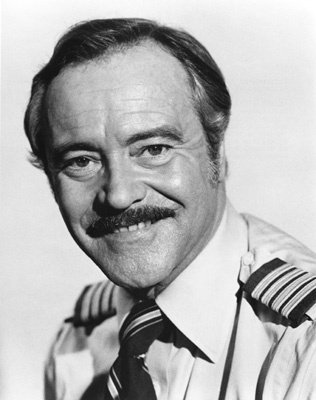
My particular worst scenes of impossible wishful thinking were in Airport ’77 with Jack Lemmon telling pax in the B747 on the seabed that they’d be OK, as the aircraft is pressurised!

Jack Lemmon
Jack Lemmon in Airport ’77.
Airport 77
Wishful thinking!

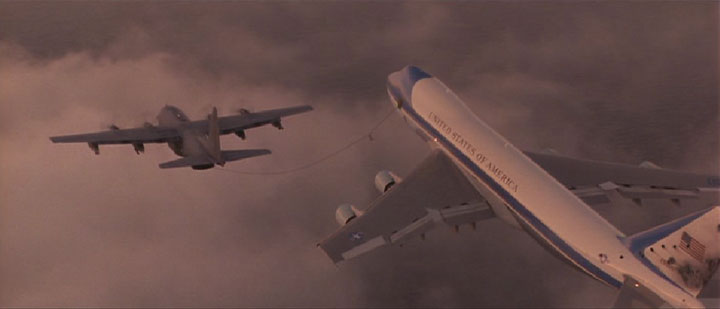
Or what about the rappelling between aircraft in “Air Force One” – only in Hollywood!

airforceone_02
C-130 and B747 formo in” Air Force One”.

Now the question a number of people have asked me: Could a non-pilot land a commercial aircraft?

I think it is highly unlikely that it would result in a successful landing – with lots of patter and assistance (provided the radio frequencies are set up correctly) a non-pilot would probably manage to position the aircraft near an airport, using the various automated systems. He or she could possibly even configure it for an autoland, should conditions allow – unfortunately any out of limits situation may well disengage the autopilots. However, manually executing a landing would probably result in severe damage and possible loss of life. Let’s face it, unless you were trained for this, gently placing many of tons of metal onto a very narrow piece of tarmac at speeds of around 250 km/h will take some doing!

Fortunately we do not have to worry about such Hollywood scenarios. Rather enjoy the flight and trust that your pilots are well rested, well fed and healthy!

Featured Pic: Getty Images. Other Pics: Movie Promo Material

Don’t Disturb! (Please?)

I hate parties. Particularly if I’m not one of the revelers and desperately trying to sleep.

This is the dilemma of the line pilot (and their long-suffering families). Non flyers find it hard to understand the anti-social behaviour that we tend to exhibit at times – aren’t aircrew supposed to be serious party animals? Trying to arrange a dinner with friends becomes a challenge; finding an evening where you’re free without an early sign-on or a late sign-off is the quest for the holy grail.

I do recall that many years ago we would have a reasonable amount of free time during night stops, which would allow for some socialising. But the nature of airline ops have completely changed, especially for short haul crews.

Captain Sully Sullenberger (Miracle on the Hudson) describes the new short haul crews as the “slam and click” generation – get to the hotel room, slam the door and click the lock. Believe me, the last thing I need when I finally get to my hotel room at 01h00 in the morning (we do have pairings which land after midnight), is not being able to sleep.

Tired Pilot

Unfortunately, life goes on and your body clock does not allow for the wild variations in airline rosters – so getting to sleep at 02H00 does not mean that you won’t wake up early. After all, normal people wake up around six or seven in the morning! And then we sign on early afternoon and fly to almost midnight again.

This is where the revelers come in: Lo and behold, just after your tired body finally succumbed to sleep, some drunken louts will come down the passage, yelling and singing, slamming doors and generally showing their ill breeding.

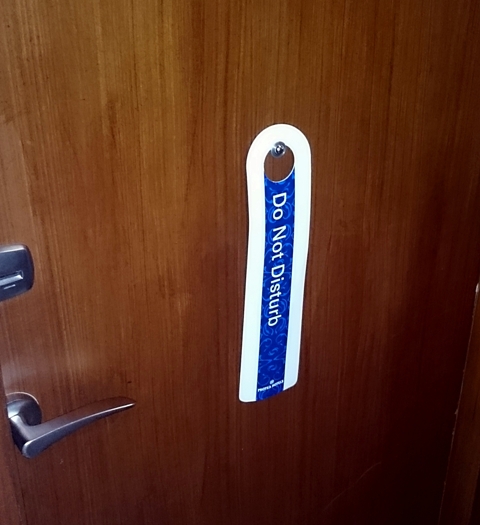
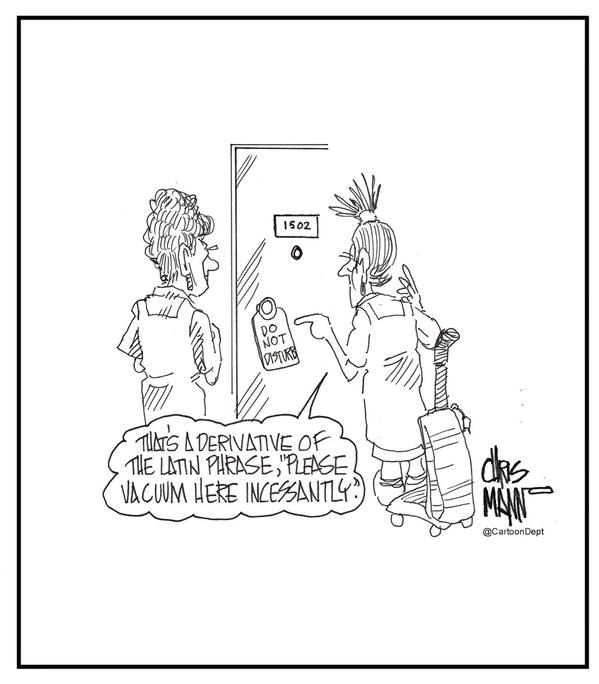
To add insult to injury, no-one seems to realise that “Do Not Disturb” does not only mean don’t enter.

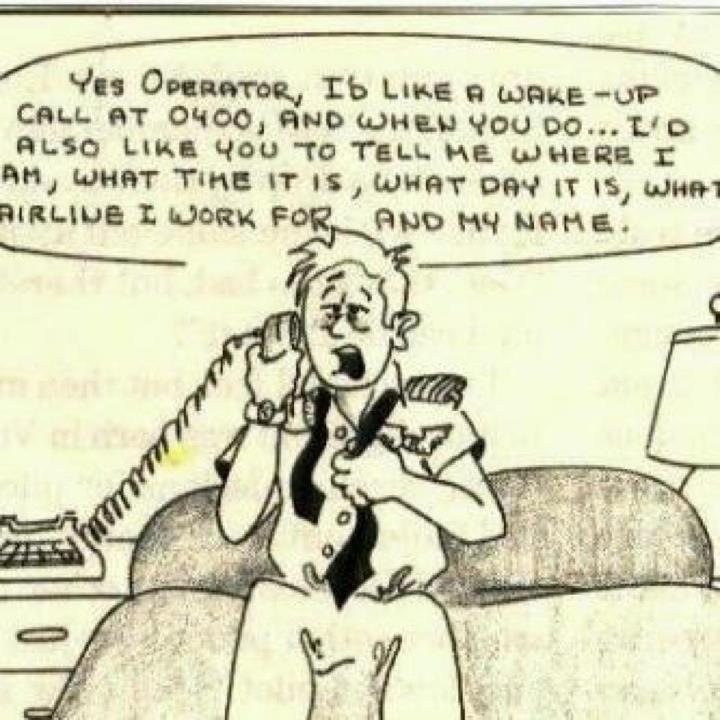
Chris Manno
Capt. Chris Manno’s take on hotel staff – the same everywhere, I’m afraid!

A few years ago FlightGlobal magazine published the results of a survey of some 2000 aviation professionals. The question was: “List your perceived top threats to aviation safety”. Top of the results list? Fatigue among safety critical crew (pilots, FA’s, engineers, ATC’s, etc.)

Early in September I attended one day of the aviation safety conference in Cape Town, where Jonathan Davy presented a paper on fatigue. He is completing his PhD at Rhodes on fatigue in shift workers – obviously there is much that corresponds with the way air crews work.

DSC_0474-crop
Jonathan Davy at the African Symposium on Human Factors and Aviation Safety.

Bottom line is that we can recognise the symptoms of human fatigue very easily – but for a diurnal species, designed to be awake during daylight and asleep in the dark, finding a cure is proving extremely difficult. The new buzzword for airline unions is FRMS (Fatigue Risk Management System). Whether it will simply remain a buzzword, or whether it will actually result in some tangible results remain to be seen – I must say that I’m rather sceptical.

The challenge is to arrive at a system where the poor human element will be able to keep up with the increasing workload demands of a work-intensive, high-tech, high cost industry with low yields. The bottom line counts and humans are expected to cope.

An airline captain’s priority is the safety of passengers and crew – it will be a sad day when that is compromised by the biggest current threat to aviation safety. Pilots are can-do people and they find it very difficult to call in sick, never mind calling in “fatigued”. So we get on with it and do the job required of us – as safely and efficiently as possible. The surreal early sunrises and expansive city vistas at night make up for the drudgery of 3 o’clock starts and 1 o’clock finishes.

So I do apologise, but please bear with me when I appear somewhat grumpy while you are having a ball at your late night party? And, for the record, I don’t really hate parties!

Evacuate! Evacuate! Are you ready?

“After eighty knots, we’ll be go-orientated. However, in the event of a decision to reject before V1, I will…..”

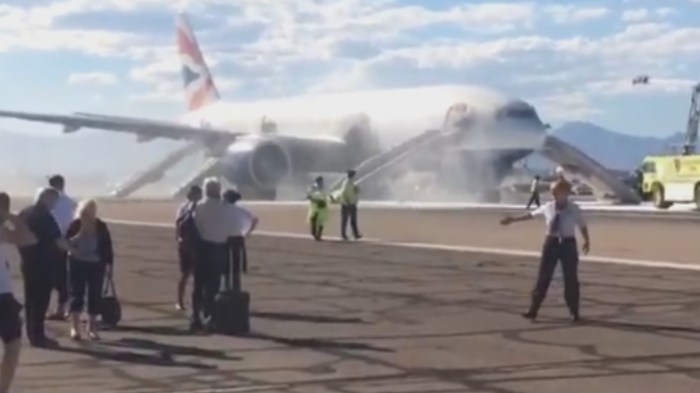
This is how pilots start the RTO (rejected take-off) briefing before each and every flight. Most hope to never have to execute this in anger, but it is thoroughly trained during every simulator session. (I have had a few actual RTO’s for technical issues, certainly nothing as dramatic as the severe engine damage suffered by the BA Boeing 777 at Las Vegas yesterday).

While the pilots prepare the cockpit, the cabin crew are also going through a thorough briefing, explaining how passengers should act in an emergency. In essence the most frequent fliers you can find thoroughly brief all the potential emergencies every time they fly.

Yet passengers, whose lives could depend on these briefings mostly tend to ignore the instructions. Just look around and you’ll see them,  burying their noses in newspapers, texting, calling, looking important with their laptops and tablets – completely oblivious to the life saving message directed at them.

By ignoring the safety briefing it almost appears as though they want to prove that this is old hat – “I don’t have to pay attention, I fly so much. Look at me, I know all this stuff..”

Yet, when that emergency does happen, these passengers are usually the very people who react incorrectly and potentially endanger the lives of all on board.

The recent BA2276 passenger evacuation once again showed us how little regard passengers have for the instructions which could save lives.

BA fire4
Bags, trolley cases, you name it – what happened to “leave everything behind”? Why rush? The fact that tons of Jet-A1 could explode seems of no concern.. (Pic: Independent).

Part of the problem is that we have positioned air travel as so safe and so reliable that our passengers are simply not ready or prepared to accept that things could actually go wrong. Once they’re settled on board, their next planned action is to disembark at their destination. Any disruption to that programmed thinking will have a startling effect and result in the improper reactions we’ve once again seen in the Las Vegas incident.

History shows that aircraft fires mostly have catastrophic results – unless the correct procedures are initiated very, very quickly and efficiently.

Pilots and cabin crews are trained to execute these life saving procedures which could effectively ensure a safe outcome. Aviation has learnt from previous disasters.

BritishAirt 28m
British Airtours B732, Manchester, August 1985. 55 out of 130 passengers died. (File pic).
AirCanadaDC9
Air Canada DC9 at Toronto, June 1983. 23 of 44 passengers killed. (Pic: deicinginnovations.com).

Our passengers have not had this intensive training and thus rely on the crew to keep them out of  harm’s way. They clearly do not realise that this is a two-way contract: I’ll do my part, but you need to do yours as well! The first required step is to be courteous enough to pay attention to the safety briefing. Those last minute calls should have been made before boarding; no spreadsheet is so important that it can’t wait until we’re at cruising altitude; that newspaper is not going anywhere.

Regular flyers may think that they’ve heard it all and would know how to react, but experience and research has shown that when an evacuation is ordered passengers tend to head straight for the door where they boarded, not the one closest to them, or even the safe exit pointed out by the crew. In yesterday’s BA 2276 evacuation the over-wing exits were not used (for obvious reasons) – but identifying the hazards and blocking certain exits is all part of cabin crew training.

After his landing in the Hudson river, the majority of passengers told Captain Sullenberger “If only we had listened to the safety briefing!” Most of those passengers ended up without their life jackets or did not know how to put them on.

Miracle-On-the-Hudson3
Very few passengers have life jackets on. (Pic: Reuters).

Human Factors research has shown that in an emergency situation humans will probably follow their last or most recently rehearsed or executed course of action – if that is not the required action, disaster could follow.

That is why  flight crews brief every phase of flight before they get there – the last rehearsed action. Cabin crew do the same: Before every departure or landing they go through their Silent Review, rehearsing in their mind’s eye their actions in an emergency.

When passengers pause for a moment to consider their behaviour on board, they should bear in mind that cabin crew are safety officers who are responsible for passengers’ safety. While time allows they can serve coffee or tea, but that is not their primary function.

That primary function is to ensure that all on board stay alive – even should it require screaming and shouting at passengers to shake them out of their momentary confusion, shock and disorientation in an emergency evacuation.

BA fire5
American Airlines Captain Chris Manno’s take on irrational passenger behaviour.

Here is some practical advice to passengers:
Firstly – have the good manners to pay attention to the safety briefing.
Secondly – have your important ID documents on your person.
Finally – leave everything else behind when ordered to evacuate – those things can be replaced, your life cannot.

Crew members should remember why we are there: To safely and comfortably transport passengers to where they want to be. Should delays or emergencies make that impossible, the crew’s duty is to ensure that everyone survives with minimum injury or discomfort.

And don’t worry, someone else will post the pictures on the internet even before the emergency vehicles get there – so you’ll get to see it later!

Good News vs Bad News

There is a cynical adage that a good reporter would never let the facts get in the way of a good story. In reality the facts very often actually make good copy – but they may tell a terribly sad story.

Our politicians believe that the media are guilty of only reporting negative stories and not focusing on the positives. Needless to say, politicians should perhaps create positive stories, rather than to provide the media with ample material for a multitude of negative reports about corruption, crime and nepotism.

Leaving politics aside – nowhere does factual reporting lead to more emotional responses and accusations of negative reporting, than in aviation accident reports.

A recent case in point:

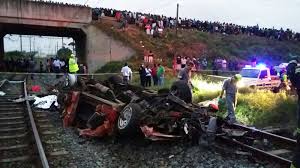
Two accidents on the same day. One claimed the lives of fifteen people, the other, five. The greater death toll warranted a few pictures and a few lines on TV and Radio and after two days was hardly mentioned any more. The five deaths resulted in a flood of media coverage for more than a week and pages of emotion on social media.

What is the difference, you ask? The fifteen people perished in a gruesome minibus taxi accident, the five in an aircraft crash. For those of us involved in aviation this extra public fascination with aircraft accidents remains an enigma.

Taxi
Shaka’s Rock taxi accident. Pic: http://www.enca.com

To me it proves again that, even in this modern age, we are still fascinated by flight – more so than by any other mode of travel. We have positioned airline travel as the safest form of transport available and our public have bought into this concept, not making the distinction between scheduled airline operations and any other general aviation flights.

The major cause of a car/bus/truck accident is usually pretty obvious. The brakes had failed, the driver was drunk, a tire burst – the final link in the accident chain is easy to find. Somehow, we accept road accidents as par for the course – almost as if they are unavoidable.

Any aircraft accident, however, leads to immediate speculation about what happened – we need to know why this happened, because we believe that it should not happen. This allows social media and the news media to have a field day – as I found out after a recent aircraft accident. Within hours of my posting the information as I had received it from a very reliable source at the accident site, reporters were e-mailing and phoning me. One major news channel quoted my post verbatim and even posted a direct link to my Facebook CRM page.

While I did not speculate, I did state in one instance that unconfirmed reports had indicated that the accident aircraft was in the process of flying a procedural approach, which may have gone wrong. The response to my post and media statements was, to say the least, very interesting.

Some personal, rude and insulting responses were posted in reply to my post, as well as a number of more lucid posts, agreeing  with my early assessment.

The emotionally charged responses caught my attention – they conformed to the typical and expected reactions after an aircraft crash. After each and every aircraft crash one finds the immediate repudiation of those who might suggest that the pilot/s involved could potentially have made an error, followed by glowing testimonies about the experience, professionalism and skill of those pilot/s.

However, ever since the 1979 NASA conference on Resource Management on the Flight Deck, we have known that human error is responsible for almost 70% of all aircraft accidents. Almost forty years later, that statistic unfortunately still stands. My whole involvement in CRM and Human Factors revolves around this reality and our attempts to avoid more smoking holes.

We can explain the emotional responses in terms of the five stages of the Kübler-Ross Model, which described the human response to death and dying:

First, Denial and Isolation – I don’t believe this is happening, I isolate myself from the reality, its not happening to me.

Then, Anger – This is wrong, it shouldn’t happen, its someone’s fault.

Next, Bargaining – Tell me its not true, maybe you missed something, if only we stopped them, if only the weather was better.

This leads to Depression, which would require help to be overcome, and, finally – Acceptance.

Those negative responses then represented the first two stages – Denial and Anger. One would have to work through the next stages to finally come to acceptance and understanding. Understanding that while it is human to want to speculate about the reasons for such a terrible crash, it should never become a blame game.

shoreham-wipeout-2
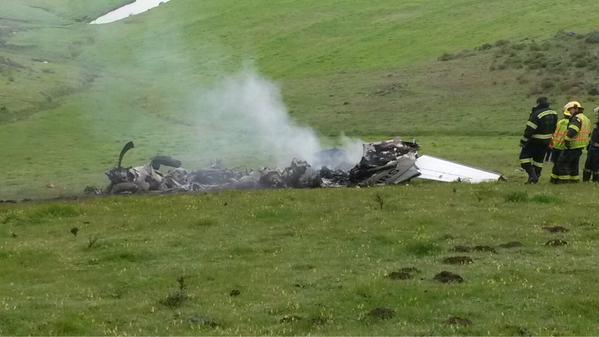
Hunter crash at Shoreham. Pic: http://www.mirror.co.uk

The recent Hunter crash is another case in point. The public (via the media) immediately started looking for a scapegoat and the British CAA responded by ordering a review of airshow regulations, as well as grounding all Hawker Hunters (denial and anger). Somehow the media and public now feel vindicated – to what end though? With stringent airshow regulations already in place, the CAA may have no choice but to ban airshows over land! Hopefully reason will prevail in the end.

I postulated at the start that politicians should rather create positive stories than to blame the media for negative coverage of their shenanigans. Perhaps we as pilots and aviation professionals should take heed as well. The positive stories of the many millions of safe flights conducted every day are easily overshadowed by one sad accident.

DSC03176
Another safe flight about to land – no headlines.

The answer is deceptively simple, albeit perhaps unattainable: Aircraft accidents make headline news – to avoid those headlines, we should avoid the accident.