Elon Musk predicts that in a couple of years, we will only be driving cars for recreation – transport will be automated.
The RAeS (Royal Aeronautical Society) recently held an interesting debate in London about the future of pilots in aviation. I followed this with great interest and the proposal that we will have pilotless cockpits within forty years was carried with a large majority.
Read any commentary on the current state of commercial aviation, and while it is acknowledged that it is safer than ever before, the general consensus is that pilots have been lulled into complacency by automation and have lost their basic flying skills.
As we kick off 2016, there we have three propositions which, effectively, indicate that we – pilots – are an endangered species. Add to these the advent of drones, which, especially in the military environment can be controlled from thousands of miles away to devastating effect.
Commercial Aviation is safe. In fact, the recently published annual statistics by ASN (Aviation Safety Network) indicate that 2015 was the safest year ever for airliners.
A decade or so ago the major causal factor in commercial aviation accidents was CFIT (Controlled Flight into Terrain). Training and the advent of Enhanced Ground Proximity Warning Systems (EGPWS) countered that trend. During the last decade the major causal factor in airline accidents has proved to be Loss of Control in Flight (LOCI), a fact which supports the contention that pilots are losing their stick and rudder skills.
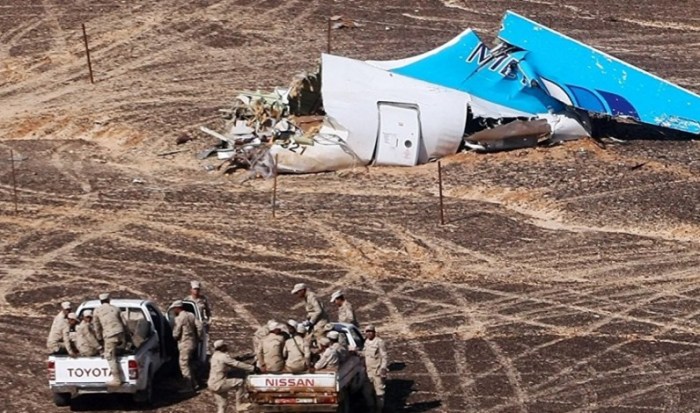
And now we see a new, worrying trend emerging – the 2015 statistics show that most fatalities were a result of only two accidents. 150 people died in the Germanwings disaster on the 24th March 2015 and on the 31st October last year 224 people died when the Metrojet A320 was shot down over Egypt. Both caused by human depravity – not the usual “pilot error” or mechanical failure. The previous year’s Malaysian disasters fit this trend as well – the one shot down and the other still a mystery, but probably downed by dark intentions.
About the shooting down of civilian airliners not much can be said. It is terrorism and depravity of the worst kind. But what about the deliberate crashing of an airliner by the very people who should ensure its safety?
About LOCI we can do something. We can enhance high altitude handling training, we can up the required standards, we can add extra warning systems.
But what can we do about the insidious potential danger of a pilot “losing it” and endangering the aircraft, passengers and fellow crew members?
There lies the challenge for airline managers and their HR departments – the days are gone where pilots would come up through the ranks via the Air Force or contract or charter flying – this would act as a natural sifting process and only the dedicated and flying fit would make it through.
My concern is that modern aviation trends would tend to allow pilots who lack experience or the required resilience into cockpits – perhaps causing more trauma than we would like to imagine.
Unless we can solve this new-found dilemma, the RAeS debate’s outcome could become our future reality.
But would you like to be a passenger on a pilotless aircraft?
One has to question whether a computer would have made the decision to land in the Hudson river, saving all on board. In the case of QF32, where the pilots had to land their overweight and crippled A380 on too short a runway the computers were so confused that they were providing false information.
Despite the fact that Artificial Intelligence is being developed apace, my prediction for 2016 is that we will not see that pilotless flight this year – and frankly, I would hope not for many a year!
 Hangar Talk with Eon
You must be logged in to post a comment.