Nobody should die in an aircraft during peacetime…

That’s a quote we often use during CRM training.

For a number of years most airline pilots used to be former Air Force pilots. Many of whom managed a seamless and successful transition to civilian flying. The numbers of ex-military civilian pilots may have dwindled, but many still make that transition.

During two decades of Human Factors training, I have also encountered the military “mission attitude” – and spent many hours explaining that an airline schedule does not have to be kept at all costs!

Jay Rayner’s book “Stardust Falling” is a very worthwhile read, telling the sad story of a military mindset, which killed too many innocent civilians.

Fortunately, aviation has come a long way since those postwar days – when the Captain’s word was treated as Gospel.

I can recommend this article from Flight Safety Australia, which looks at Bennet’s unfortunate, unenviable and simply sad history.

The Time has Come

The time has come,' the Walrus said,
To talk of many things:
Of shoes — and ships — and sealing-wax —
Of cabbages — and kings —
And why the sea is boiling hot —
And whether pigs have wings.'
        (The Walrus and the Carpenter – Lewis Carroll)

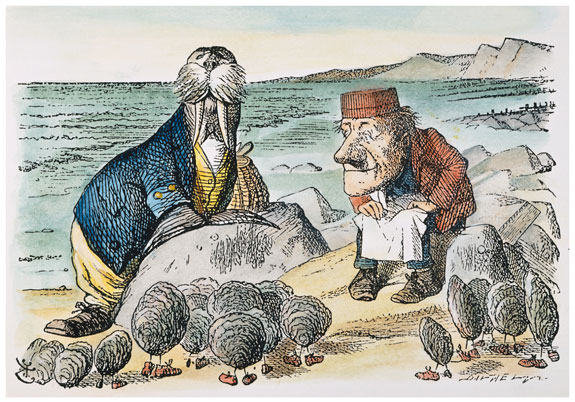
Life is all about choices – so the old cliché goes. One could choose life as a self-determined destiny, or as a predestined, no-control condition – or as a condition and conclusion decided by others. This external control choice is what the poor oysters who ended up on the buttered bread had exercised. (Carroll’s poem, from “Through the Looking Glass” speaks about a walrus and a carpenter who trick innocent young oysters and eat them after a walk on the seashore).

However, the human condition is inexorably linked to the inevitable passage of time. One of the benefits of this countdown, is that with age comes experience and (hopefully) some wisdom. In Carroll’s poem the eldest oyster decided not to follow, while the younger ones went off to meet their doom…

So, how important is age? Popular literature portrays age as “just a number”, but in flying, unlike most other occupations, the decision about when you should be put out to pasture is not your own. A preset age, arbitrarily determined by regulators (presumably with some input from actuaries quoting statistics) renders one quite suddenly incapable of commanding an airliner. This after a pilot has twice a year, for many years, proved his or her capability to regulator and airline, flew the line without mishap and could still pass a Class 1 medical without any problems.

However, where the young oysters could not foresee the end, at least pilots are pre-warned and thus prepared for the event.

Just not this time…

Suffice to say that COVID-19 has decimated the aviation industry, and all too many articles have already been written about it.

Qantas chief executive Alan Joyce described it as ‘the worst crisis the aviation industry has gone through’. United Airlines chief executive Oscar Munoz has called it ‘the most disruptive global crisis in the history of aviation’.

Around the world, 22 major airlines have gone into bankruptcy or administration. Manufacturers and operators including Airbus, Rolls-Royce, British Airways, Ryanair and Qantas announced job cuts totalling tens of thousands. Fortune magazine estimated 670,000 aviation jobs had disappeared by June 2020. With 92 per cent of its fleet on the ground, Lufthansa put 80,000 of its 130,000 workforce on shortened hours.

The International Air Transport Association (IATA) says air transport is likely to witness a dive in revenue of 55 per cent in 2020 compared to 2019. IATA expects the resulting slump to lead to 32 million job losses

Worldwide, many pilots are retiring early or accepting severance packages. Many more are simply leaving the industry, possibly never to return – pilots possess many interchangeable skills which could be used in miriads of other fields.

Some have had the misfortune of living with no pay during lockdown, now possibly returning to fly a reduced schedule for a shrinking airline and with severely reduced remuneration packages.

Others suddenly found themselves out in the cold – having reached that disqualifying age during the pandemic. Months without income suddenly followed by “retirement”.

“Not too bad”, I hear you say – and you’re correct. It is indeed better than many others’ circumstances. But is is still sad for senior pilots not to have any say in the matter, not to have had the planned run-up to the final flight and the goodbyes.

For those of that certain age it becomes a case of dealing with retirement investments and financial advisors – who all resemble the walrus and the carpenter – presenting a rosy picture while planning to have you on buttered bread…

The eldest Oyster looked at him,
But never a word he said;
The eldest Oyster winked his eye,
And shook his heavy head—
Meaning to say he did not choose
To leave the oyster-bed.

Forty years of flying have taught me this: Given the time and thought required, the storm will clear and the emergency can be resolved. And it requires the patience and resilience of the eldest oyster.

Just like this oyster – who remained put – the secret is to await the next high tide. That high tide will inevitably arrive, recede and arrive again. With it will come the vision of fresh waves to wash away the grit and sand, providing new nutrients and yet another opportunity to grow.

The time has come, to talk of many things… and about where to next.
‘Pilots are losing their basic flying skills’

We’ve heard this argument many times over the past decades. The concept states that automation has made flying safer, but that it has reduced pilots to computer operators, who can no longer hand-fly their aircraft.

It has now surfaced again in the aftermath of the two deadly Max crashes – raised here in this USA Today article . One of the very experienced pilots quoted in the article is John Cox, who argues that training should concentrate more on manual flying skills than what currently is the case.

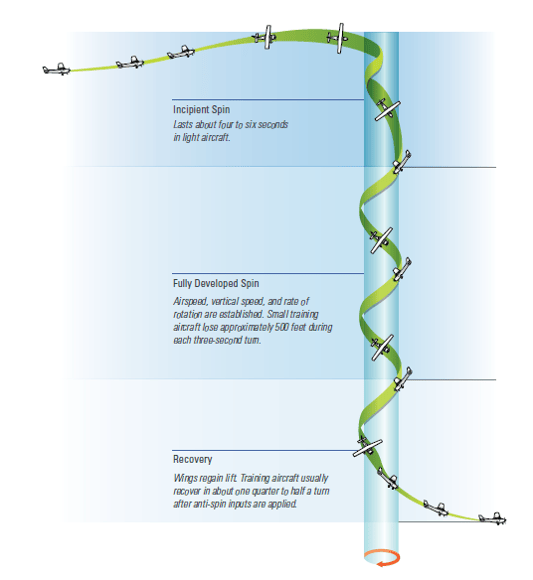
I found that this may well link to a recent article published by Flight Safety Australia, summarising the final report on the crash of a Diamond DA40 in September 2017. At issue here is the fact that the DA40 is not approved for intentional spins – and the instructor and student were killed when they spun in.

Now – when we talk about flying skills, initial training teaches the basics required to take off and land, fly straight and level, climb and descend and to turn the aircraft. There are lessons on stalling and then incipient spins – but it would appear that most of the new LSA (Light Sport Aircraft) often used as trainers are not approved for spins or even incipient spins.

Most of the older, more traditional all-metal trainers (before them even the rag-and-tube aircraft) were approved for spinning and spins used to be part of the training curriculum. But this changed a quite while ago, when the FAA and then our local CAA decided that pilots don’t need spin training: If they understood what the causes of spins are, they would avoid spins – that’s if I understand the logic of their decisions correctly.

How does this have any bearing on crashing airliners?

A recurring theme in recent crash investigations appears to be a dearth of experience in the cockpit. I’m not inferring that lack of experience points to crash-prone pilots – far from it. But it does indicate that most of the newer pilots would have been trained under the new regulations, which do not require spinning. This leads me to suspect that most of these newer pilots have never had any proper unusual attitude and recovery training – in simple terms it points to a lack of hands-on flying experience. Not their fault, but that of a system that allows young instructors – who themselves have never spun an aircraft and are actually afraid of simple stalls – to teach our future airline pilots. (Back to the point raised in the USA Today article).

When I was still involved in ab-initio training, (many moons ago) some of the younger instructors would ask me to take their students for the lessons on stalls and incipient spins. (My aerobatic background apparently made me the obvious candidate). My answer would be to rather take the instructor up to experience the joy of flying an aircraft to any attitude and still remain in control – but time and money did not always allow.

Added to this, the prohibition of spins in modern “glass” aircraft remains a serious hurdle. Even the great Cirrus range of aircraft, in which many new South African pilots are being trained, is not certified for spins.

The answer would be for any student to spend some money and time on unusual attitude training in a spin-capable aircraft. This would probably have to be an aerobatic machine, but such courses are available. Those hands-on skills will enhance their flying and build confidence.

That confidence could serve pilots well when, in their later careers they’re suddenly faced with an unusual situation. Airline training simply teaches procedures, which work extremely well – but for those unexpected upsets, nothing beats simple stick-and-rudder skills.

Featured Image: Studyflight.com


The Challenge of Leadership

Motor racing has fascinated me since boyhood. (Many years ago I even raced an Alfa Romeo myself – albeit not very successfully!)

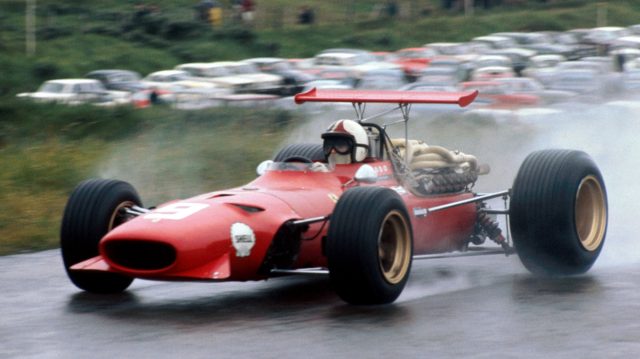
In particular I’ve followed Formula One – especially the longest lasting F1 team, Ferrari, which I’ve followed since the days of Chris Amon and Jacky Ickx.

Chris Amon(NZL) Ferrari 312. Dutch Grand Prix, Zandvoort, Holland, 23 June 1968.

Being one of the “Tifosi” meant that I’ve despaired about the team’s misfortunes over the last few years. Since the glory days of Michael Schumacher, with team bosses Jean Todt, Ross Brawn and the South African designer Rory Byrne, Ferrari was on a downward spiral, with their last World Championship more than a decade ago, in 2007 with Kimi Raikkonen.

Since the advent of the hybrid era, Ferrari seemed to be an also-ran. Until 2018, when all of a sudden they had a competitive car and looked like a winning team.

For a while.

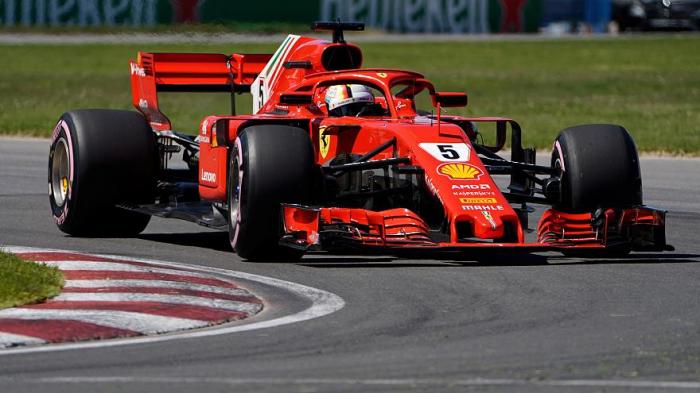
Then the wheels came off and Sebastian Vettel looked startled and out-of-sorts, making all sorts of (for him) silly mistakes. The team’s strategists seemed to fumble from one blunder to the next and Ferrari eventually had to settle for second best.

How are Ferrari’s F1 woes relevant to aviation? The answer is: Leadership.

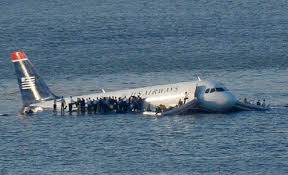
As we celebrate the 10th anniversary of the “Miracle on the Hudson” landing – where Captain Sully Sullenberger’s leadership skills were as much on display as were his flying skills – the captain’s duty to build a team around him is pertinent.

15 January 2009

On reading Will Buxton’s opinion piece about Mauritzio Arrivabene’s demise, one has to draw some parallels to the airline captain’s responsibility for ensuring a successful and safe team.

“Arrivabene’s rule by fear fractured his team and ultimately failed his employers” rings true to many failed leadership issues in aviation as well.

What is it that sets good leaders apart from the also-rans?

There are many academic definitions and as many popular quotes from people like Richard Branson, Alan Mulally (Boeing GM for the B777 project and later CEO of the Ford Company) among others.

On analysis, two words pop up repeatedly: Trust and Respect. Two attributes which Ferrari’s Arrivabene could not claim – and it cost him the prized position after four seasons.

Speaking about Just Culture Job Brüggen, safety officer at LVNL and co-chair of the Eurocontrol Safety Team put it this way:

Everyone wants to be good,
but if people feel the atmosphere could be tending to “blame and shame”,
they become less interested in being good –
they just want to look good.

When people simply cover their own backsides and avoid taking responsibility – look to the leader for the reason.

“The walls, both physical and metaphorical, were quick to go up around the team. But far from creating a safe environment in which the once mighty outfit could rebuild, it appeared that what was being built was a system built on the fear of failure”. This was what Arrivabene did to the once proud Prancing Horse.

The lesson here is simple. To lead implies a two-way agreement – someone leads and others follow. But if the “leader” fails to gain the followers’ trust and respect, he or she can lead all they want – no one will follow.

Is it any surprise that some “leaders” sooner or later find themselves out on their own, without any actual support? Arrivabene learnt this lesson the hard way.

Hopefully Mattia Binotto, the new Team Principal, will know that leadership demands much more than the position and the authority. It demands an attitude – something special, which allows people to follow the vision of their leader.

Hopefully the Scuderia will benefit and become winners again.


Hindsight – The most exact science..

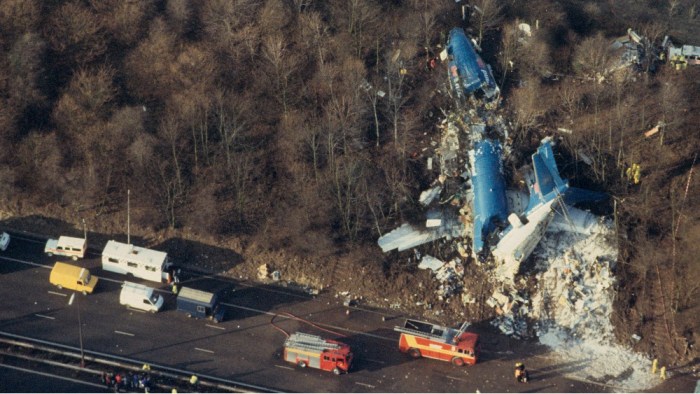
Today marks the 30th anniversary of the Kegworth air disaster – a crash which has since become a standard in CRM classes.

The story is well-known: Blade failure on the number one engine resulted in the pilots mis-diagnosing the problem, shutting down the number two engine instead. This led to the disastrous outcome, costing 47 of the 118 passengers their lives, with 74 people suffering serious injuries. 

Airways Magazine today published an Op-Ed about it, which singles out one of the major lessons learnt – because of the subsequent research into effective brace positions, safety cards and crew briefings, major changes were made to the way passengers are taught to brace for impact. (Click on the link).

However, in total more than thirty-one recommendations were made in the accident report, many of them then became binding for manufacturers and operators. 

While many factors were at play here – and we use many of them in our initial courses as examples of absent CRM – to me one of the most interesting factors is the (then) new CFM-56 engine. These engines were reasonably new in 1989, only being operated on a commercial jet for the first time in 1981. The B737-400 was also a new aircraft, first operated in September 1988. The accident airframe, G-OBME, was only delivered to British Midlands in October 1988 – two-and-a-half months before the crash. 

The CFM-56 used on the -400 was an uprated version of the engine used on the earlier -300 variant. (The -300 was launched in 1984). 

To uprate the -300 engine from 20 000 pounds of thrust to the 23 500 required for the slightly larger -400 required only an electronic chip to increase the N1 (RPM). However, this modification was never tested in the air, only on a test rig, before being certified for use on the -400. Unknown to the manufacturer and operators, blade stall became a problem above 10 000 feet and this was what eventually resulted in the blade failure on the accident aircraft.

The problem was easily rectified, and the CFM-56 is now probably one of the most reliable engines ever built. 

However, it took an accident to lead to this improvement.

Too often this is the case. We learn from each accident and try to understand all the factors involved – in an attempt to avoid similar accidents occurring. But all to soon, it would appear, we become complacent about those lessons learnt – and only yet another crash leads us to question whether we’ve actually learnt anything at all!

Debris from the crashed B738-Max being recovered.

Take, for instance, the recent crash of a LionAir B738-Max – to my mind also caused by a design change which caught everyone by surprise. (Although the previous crew to fly the doomed aircraft experienced the same problem, they had the resilience to recover the aircraft by reverting to good old manual flight). However, without the knowledge about the potential problems associated with the MCAS system, the accident crew were clearly confused by the malfunctioning automation and were unable to regain control. 

To my knowledge the British Midland crews had been operating B737-200 aircraft before, and only attended classroom differences training before flying the -400. As someone who has flown many of the variants, ranging from the 737-Basic to the B738, I know that the only way to convert from the -200 to the -400 would be proper simulator training – they are quite different aircraft. This lack of training could well have been another link in the Kegworth accident chain.

And now pilots were once again expected to convert to a new B737 model with a little classroom video and a CBT test. 

It would appear to me that we’re not inventing new ways to crash, we’re simply repeating the same mistakes over again.

In the same breath I must add that we have certainly come a long way since the Kegworth disaster. The recently published accident statistics bear testimony to the fact we are on a sustained downward trend, and flying is in fact safer than ever.

It’s just such a pity that we always have to remember accidents like Kegworth, to remind ourselves of the potential for disaster.