Nobody should die in an aircraft during peacetime…

That’s a quote we often use during CRM training.

For a number of years most airline pilots used to be former Air Force pilots. Many of whom managed a seamless and successful transition to civilian flying. The numbers of ex-military civilian pilots may have dwindled, but many still make that transition.

During two decades of Human Factors training, I have also encountered the military “mission attitude” – and spent many hours explaining that an airline schedule does not have to be kept at all costs!

Jay Rayner’s book “Stardust Falling” is a very worthwhile read, telling the sad story of a military mindset, which killed too many innocent civilians.

Fortunately, aviation has come a long way since those postwar days – when the Captain’s word was treated as Gospel.

I can recommend this article from Flight Safety Australia, which looks at Bennet’s unfortunate, unenviable and simply sad history.

The Time has Come

The time has come,' the Walrus said,
To talk of many things:
Of shoes — and ships — and sealing-wax —
Of cabbages — and kings —
And why the sea is boiling hot —
And whether pigs have wings.'
        (The Walrus and the Carpenter – Lewis Carroll)

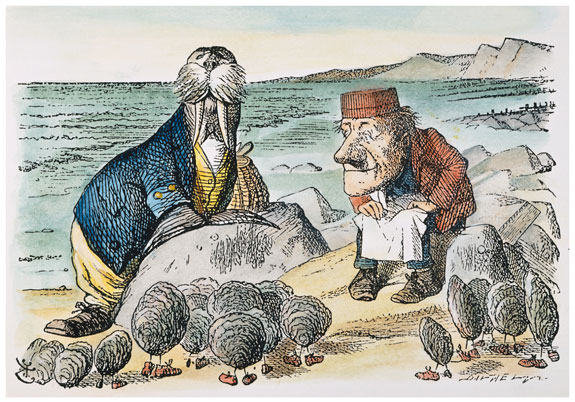
Life is all about choices – so the old cliché goes. One could choose life as a self-determined destiny, or as a predestined, no-control condition – or as a condition and conclusion decided by others. This external control choice is what the poor oysters who ended up on the buttered bread had exercised. (Carroll’s poem, from “Through the Looking Glass” speaks about a walrus and a carpenter who trick innocent young oysters and eat them after a walk on the seashore).

However, the human condition is inexorably linked to the inevitable passage of time. One of the benefits of this countdown, is that with age comes experience and (hopefully) some wisdom. In Carroll’s poem the eldest oyster decided not to follow, while the younger ones went off to meet their doom…

So, how important is age? Popular literature portrays age as “just a number”, but in flying, unlike most other occupations, the decision about when you should be put out to pasture is not your own. A preset age, arbitrarily determined by regulators (presumably with some input from actuaries quoting statistics) renders one quite suddenly incapable of commanding an airliner. This after a pilot has twice a year, for many years, proved his or her capability to regulator and airline, flew the line without mishap and could still pass a Class 1 medical without any problems.

However, where the young oysters could not foresee the end, at least pilots are pre-warned and thus prepared for the event.

Just not this time…

Suffice to say that COVID-19 has decimated the aviation industry, and all too many articles have already been written about it.

Qantas chief executive Alan Joyce described it as ‘the worst crisis the aviation industry has gone through’. United Airlines chief executive Oscar Munoz has called it ‘the most disruptive global crisis in the history of aviation’.

Around the world, 22 major airlines have gone into bankruptcy or administration. Manufacturers and operators including Airbus, Rolls-Royce, British Airways, Ryanair and Qantas announced job cuts totalling tens of thousands. Fortune magazine estimated 670,000 aviation jobs had disappeared by June 2020. With 92 per cent of its fleet on the ground, Lufthansa put 80,000 of its 130,000 workforce on shortened hours.

The International Air Transport Association (IATA) says air transport is likely to witness a dive in revenue of 55 per cent in 2020 compared to 2019. IATA expects the resulting slump to lead to 32 million job losses

Worldwide, many pilots are retiring early or accepting severance packages. Many more are simply leaving the industry, possibly never to return – pilots possess many interchangeable skills which could be used in miriads of other fields.

Some have had the misfortune of living with no pay during lockdown, now possibly returning to fly a reduced schedule for a shrinking airline and with severely reduced remuneration packages.

Others suddenly found themselves out in the cold – having reached that disqualifying age during the pandemic. Months without income suddenly followed by “retirement”.

“Not too bad”, I hear you say – and you’re correct. It is indeed better than many others’ circumstances. But is is still sad for senior pilots not to have any say in the matter, not to have had the planned run-up to the final flight and the goodbyes.

For those of that certain age it becomes a case of dealing with retirement investments and financial advisors – who all resemble the walrus and the carpenter – presenting a rosy picture while planning to have you on buttered bread…

The eldest Oyster looked at him,
But never a word he said;
The eldest Oyster winked his eye,
And shook his heavy head—
Meaning to say he did not choose
To leave the oyster-bed.

Forty years of flying have taught me this: Given the time and thought required, the storm will clear and the emergency can be resolved. And it requires the patience and resilience of the eldest oyster.

Just like this oyster – who remained put – the secret is to await the next high tide. That high tide will inevitably arrive, recede and arrive again. With it will come the vision of fresh waves to wash away the grit and sand, providing new nutrients and yet another opportunity to grow.

The time has come, to talk of many things… and about where to next.
100 Days and Counting.

Last time I was counting down at 50 days, and here we are past 100 days – still under lockdown, albeit with the somewhat more accommodating regulations of Level 3.

As discussed in my last blog, we are indeed now seeing a return to flying. It may be much reduced and restricted, but at least there is some movement. Many industry experts and organisations have speculated on just how long it would take for commercial aviation to recover, but rather than commit to forecasts, I will adopt a wait and see attitude. I’m reminded of Warren Buffet’s quip: “Forecasts may tell you a great deal about the forecaster, they tell you nothing about the future”.

What caught my attention during this period are peoples’ attitudes about the COVID-19 pandemic. One only has to look at social media posts to witness the stupid and boorish behaviour of many citizens around the world – the woman throwing groceries around or the man shouting abuse at shop assistants – instances where the issue was their refusal to wear masks, despite the clear rules at shop entrances stating “No mask – No Entry”.

Psychologists are quick to point out the reasons for such behaviour – just Google the psychological reasons for not wearing masks: You’ll be inundated with reasons ranging from denial to feeling powerless to political influence, mixed messages and psychotic or sociopathic behaviour.

All fair and well, but how are we dealing with the current situation in aviation?

Face facts, being a pilot currently is not a great occupation. All over the world airlines are laying off pilots – Emirates, Delta, Qantas, Air France, Air Mauritius – you name them, pilots are out of work everywhere. Expats are stuck with borders closed, households suddenly have no income – the situation is dire.

Now, to paraphrase Warren Buffet’s quote: Handling of a crisis will tell you more about the pilot than about the outcome.

I recently read a blog by pilot and author, Owen Zupp, who was laid off by Qantas (read HERE). While the business world and twitter experts are sprouting forth about resilience, here is a quiet example. Similarly, I recently met with a fellow Captain who had to sell his house, because they couldn’t keep up the bond repayments – yet this was done with almost stoic acceptance, dealing with the situation at hand in the most reasonable way. Just by way of explanation, crews in my company (as in many others) have been on unpaid leave since the beginning of lockdown. With no profitable flying possible for the foreseeable future, with licenses and currency now lapsed, it means proper crisis management to simply survive.

Shouting and screaming has never solved any problem – and professional pilots are trained to deal with crisis situations methodically and logically.

Thus  I found a recent webinar for GA pilots rather disconcerting.

While other people are dealing with life-and-death situations, some private pilots (and, sorry to say, some career pilots too) exhibited the same selfish and negative behaviour we see in the social media posts referred to earlier. Flaunting laws and regulations, threatening civil disobedience, using foul language – these are not traits one would expect of pilots behaving professionally. Abusing the hard-working volunteers, who actively are engaging with the CAA and other relevant departments to achieve the phased opening of recreational and sport aviation, while clearly showing a lack of knowledge and procedures, being totally ignorant of where to find NOTAMs and other relevant information – frankly, it leads me to question whether people exhibiting these negative behaviours should be allowed near an aircraft at all! .

Here we see some of the well known hazardous attitudes:

  • Anti-authority,
  • Impulsivity,
  • Invulnerability,
  • Macho, and
  • Resignation,
  • most obviously the anti-authority, invulnerability and macho attitudes.

These attitudes simply do not belong in a safe aviation environment. That is why highly experienced airline pilots now have to undergo three days of ground school and two days of simulator training before being allowed near an airliner – because they understand the associated risks and know that regulations and SOP’s are there for a reason.

Should one find regulations unreasonable or illogical, there are professional ways to bring about change. Until such time, professionals follow the rules.

I’m one of the very happy motor racing fans who are watching the first actual 2020 Grand Prix this weekend. Aviation can take a leaf from the F1 book on how to deal with the epidemic – essentially follow the published rules or you simply won’t be allowed near the track.

Simon Lazenby, Jenson Button and Martin Brundle social distancing while commentating on the Austrian GP qualifying.

The potential risks associated with not adhering to the rules for the new reality are just too great for this multi-million dollar sport – so no deviance is tolerated. And in F1 we are also dealing with strong A-type personalities, so no excuses for aviation!


50 Days and Counting

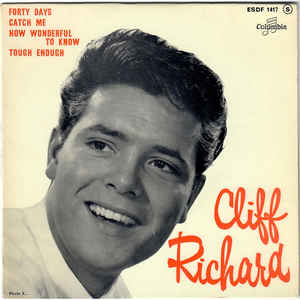
“I’m gonna give you Forty Days” sang Cliff Richard all those years ago. But we have not made it back yet – and forty days have come and gone.

Cliff

Fifty days – that’s how long we’ve now been under lockdown in South Africa.

For aircrew this could spell a multitude of problems, not least of which is the fact that most pilots and cabin crew are currently on unpaid leave. This loss of income has severe ramifications for many and it cannot be sustained for much longer.

That aside – despite the SACAA’s extension of licenses and ratings to the end of June, other implications could be as severe.

Among these is the requirement for recency and currency –  some airlines require a check-flight after 30 days without flying. Problem is, check-captains and instructors need the same, so they would have to regain currency in the simulator before doing any check-flying.

This may not be as easy as it sounds – we currently have no idea when flying will be allowed again and at what level. We can only assume that moving to Level 3 restrictions would allow for training and very restricted flights. But, should the nightly 20h00 – 05h00 curfew remain in place, (which appears to be the case under Level 3 restrictions), just imagine trying to schedule all training only during daylight hours – bearing in mind travel time before and after such simulator sessions. For airlines without their own simulators, finding and hiring time on simulators may initially be almost impossible – potentially delaying their return to training. Remember that the closed borders currently restrict international travel, which means that only local simulators (of which there are not that many) may be available.

Hopefully the restrictions on flying and flight training will not last another 40 days, at which stage the 90 day recency and currency regulations would mean that every airline pilot would have to do a simulator session before even touching an aircraft.

When we finally do start flying, albeit limited in frequency and routes, stored aircaft would have to be brought out of mothballs, checked, signed out and possibly test flown before doing any commercial flights. This could turn into a lengthy process.

Looking at IATA’s projections for the recovery of commercial aviation, we’re in for a long and slow recovery.

Interestingly enough, IATA proposes that social distancing would be impossible on aircraft. While we know that aircraft aircon systems use HEPA filters, which are similar to those used in hospital operating theatres, it appears that the travelling public is quite suspicious of its efficiency.

What is clear is that for the foreseeable future airline flying will never be the same again.

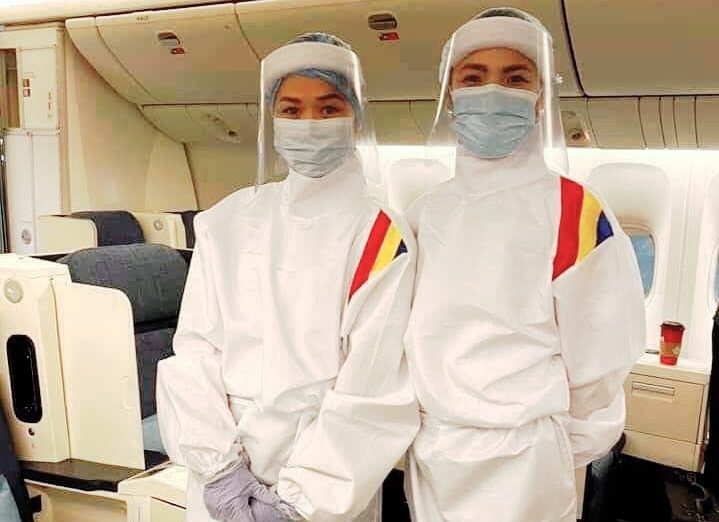
Sanitising and deep cleaning between flights will become routine, adding time and costs. Wearing of face-masks in airports and on aircraft may become compulsory – crews may look like ICU nurses.

PPE
Phillipines cabin crew in their designer PPE wear.

During flight, passengers’ movement could be restricted – you may well have to “reserve a slot” to use the toilet…

Catering could be another no-no, especially on shorter flights – locally the longest flights are only two hours in duration. On longer flights catering could be pre-packaged and sealed – fancy first-class fare could well be a thing of the past.

Eventually it would boil down to passengers being adult and taking responsibility for their own protection and health.

As for how – and more importantly, when we can expect to get airborne again – the mixed and opaque messages from goverment are not particularly helpful in this regard.

Play it by ear is the only song on our current aviation hit parade – and we’re in it for The long Run!


‘Pilots are losing their basic flying skills’

We’ve heard this argument many times over the past decades. The concept states that automation has made flying safer, but that it has reduced pilots to computer operators, who can no longer hand-fly their aircraft.

It has now surfaced again in the aftermath of the two deadly Max crashes – raised here in this USA Today article . One of the very experienced pilots quoted in the article is John Cox, who argues that training should concentrate more on manual flying skills than what currently is the case.

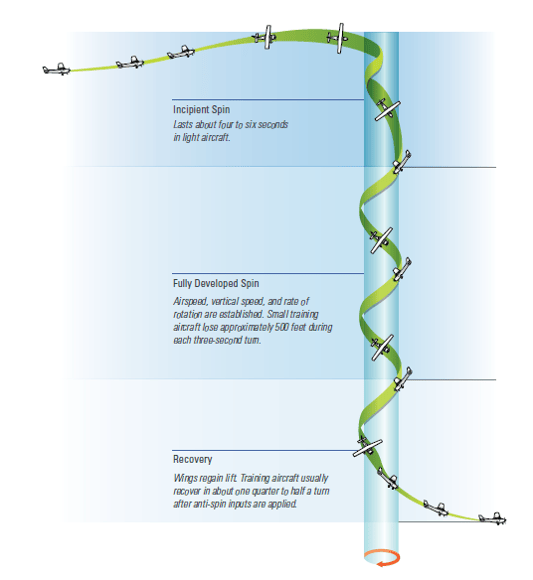
I found that this may well link to a recent article published by Flight Safety Australia, summarising the final report on the crash of a Diamond DA40 in September 2017. At issue here is the fact that the DA40 is not approved for intentional spins – and the instructor and student were killed when they spun in.

Now – when we talk about flying skills, initial training teaches the basics required to take off and land, fly straight and level, climb and descend and to turn the aircraft. There are lessons on stalling and then incipient spins – but it would appear that most of the new LSA (Light Sport Aircraft) often used as trainers are not approved for spins or even incipient spins.

Most of the older, more traditional all-metal trainers (before them even the rag-and-tube aircraft) were approved for spinning and spins used to be part of the training curriculum. But this changed a quite while ago, when the FAA and then our local CAA decided that pilots don’t need spin training: If they understood what the causes of spins are, they would avoid spins – that’s if I understand the logic of their decisions correctly.

How does this have any bearing on crashing airliners?

A recurring theme in recent crash investigations appears to be a dearth of experience in the cockpit. I’m not inferring that lack of experience points to crash-prone pilots – far from it. But it does indicate that most of the newer pilots would have been trained under the new regulations, which do not require spinning. This leads me to suspect that most of these newer pilots have never had any proper unusual attitude and recovery training – in simple terms it points to a lack of hands-on flying experience. Not their fault, but that of a system that allows young instructors – who themselves have never spun an aircraft and are actually afraid of simple stalls – to teach our future airline pilots. (Back to the point raised in the USA Today article).

When I was still involved in ab-initio training, (many moons ago) some of the younger instructors would ask me to take their students for the lessons on stalls and incipient spins. (My aerobatic background apparently made me the obvious candidate). My answer would be to rather take the instructor up to experience the joy of flying an aircraft to any attitude and still remain in control – but time and money did not always allow.

Added to this, the prohibition of spins in modern “glass” aircraft remains a serious hurdle. Even the great Cirrus range of aircraft, in which many new South African pilots are being trained, is not certified for spins.

The answer would be for any student to spend some money and time on unusual attitude training in a spin-capable aircraft. This would probably have to be an aerobatic machine, but such courses are available. Those hands-on skills will enhance their flying and build confidence.

That confidence could serve pilots well when, in their later careers they’re suddenly faced with an unusual situation. Airline training simply teaches procedures, which work extremely well – but for those unexpected upsets, nothing beats simple stick-and-rudder skills.

Featured Image: Studyflight.com